
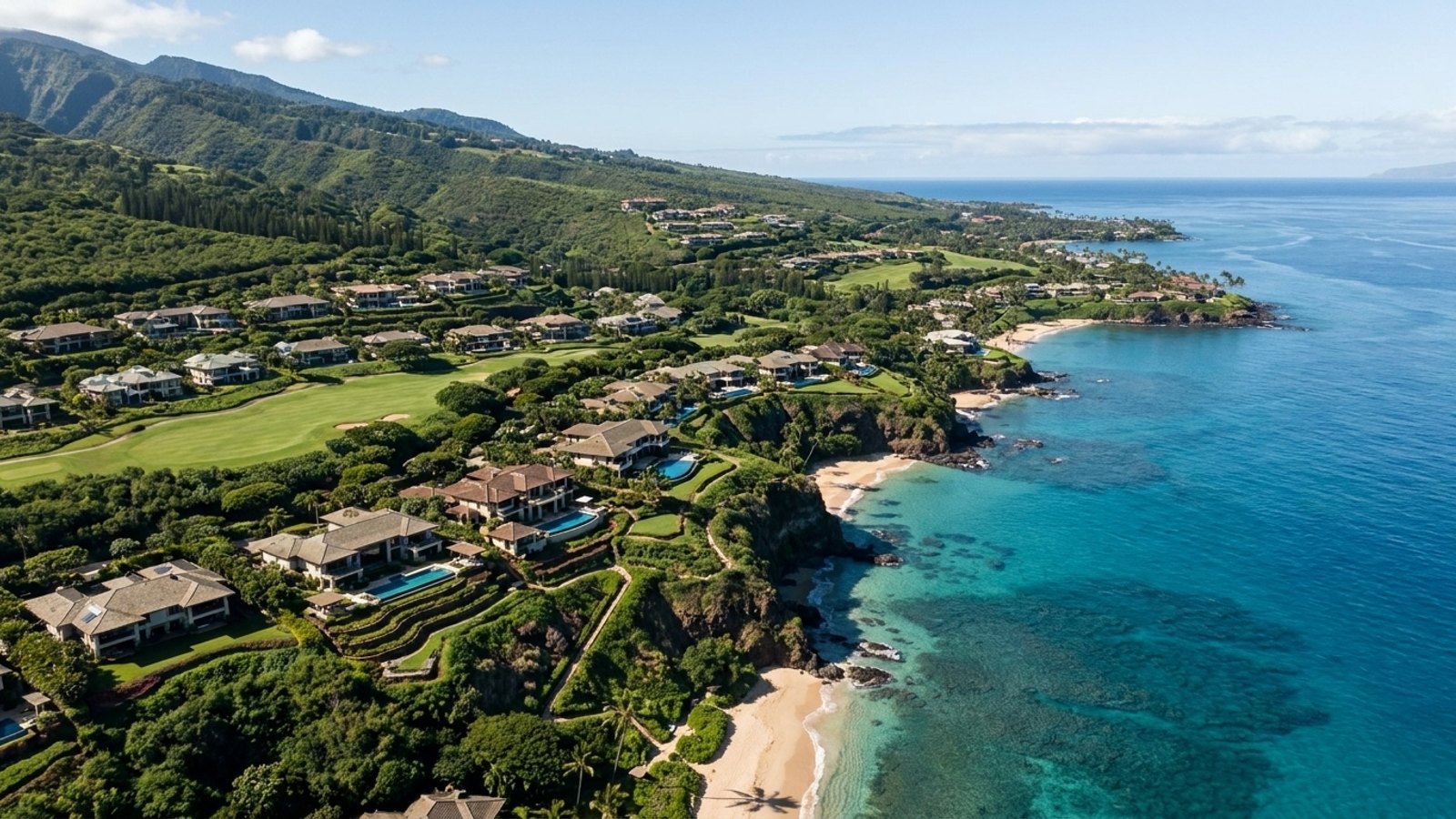
If you want to evaluate luxury property values in Maui, a basic online estimate is not enough. In high-end markets, pricing errors can cost far more than a few percentage points. They can shift buyer perception, weaken leverage, and leave serious money on the table.
Luxury valuation in Maui requires nuance. A Wailea ocean-view residence, a Makena estate, a Kapalua golf property, a Kaanapali resort condo, and an Upcountry retreat may all qualify as luxury, but they are not valued the same way. The goal is to understand your property’s true market position before you sell, renovate, refinance, or decide to hold.
Key Takeaways
- To evaluate luxury property values Maui owners should review location, views, beach access, property condition, privacy, community prestige, rental potential, comparable sales, active competition, and buyer demand.
- Luxury homes in Maui are not commodities. Two properties with similar square footage can have dramatically different values.
- Price per square foot is only one data point, not a full valuation method.
- Automated estimates often miss high-impact variables like view quality, renovation level, rental eligibility, HOA strength, and exclusivity.
- Active and pending listings matter because buyers compare your property against what they can buy right now.
- Oceanfront, ocean-view, condo, resort, estate, and Upcountry properties each require a different valuation lens.
- Documentation matters. Improvements, permits, maintenance history, and rental records can support value and reduce buyer hesitation.
- A realistic valuation should produce a range, not a single number pulled from a formula.
What does it mean to evaluate luxury property values in Maui?
Evaluating luxury property values in Maui means determining a market-supported value by analyzing the property’s location, views, condition, community, scarcity, rental flexibility, buyer demand, and relevant luxury sales. It matters because high-end pricing decisions are sensitive, and the wrong assumptions can affect both timing and net return.
Why luxury property valuation in Maui is different
Luxury property valuation in Maui is different because inventory is limited, buyer pools are smaller, and the homes themselves are more individualized. Lifestyle value plays a bigger role, and details like privacy, view protection, and resort access can create large pricing gaps.
A luxury home is not a commodity
Standard homes are often easier to compare by size, age, layout, and neighborhood. Luxury homes are different.
In Maui, value may come from a rare mix of land, architecture, shoreline setting, outdoor living, privacy, and emotional appeal. The more unique the property, the more dangerous it is to rely on a generic estimate.
Price per square foot is only one data point
Price per square foot can help frame a conversation, but it should never drive the entire valuation. In Maui luxury real estate, it often hides the exact details buyers are paying for.
It does not fully capture:
- Oceanfront versus ocean-view positioning
- Protected sunset views
- Sandy beach access versus rocky shoreline
- Lot size and usable outdoor space
- Privacy from neighboring homes
- Renovation quality
- Architectural significance
- Community reputation
- Rental eligibility
- HOA strength
- Buyer demand in a specific price tier
What factors affect Maui luxury home values the most?
The main factors that determine Maui luxury property values are location, view quality, beach access, lot utility, property condition, renovation level, privacy, community prestige, rental flexibility, ownership confidence, comparable sales, active competition, and current buyer demand.
Location and micro-market
Location is the first filter, but micro-market is what sharpens value. Wailea, Makena, Kapalua, Kaanapali, Kihei, Launiupoko, Kula, and Makawao each attract different buyers and justify different pricing logic.
A luxury buyer considering Wailea may prioritize resort polish and walkability. A buyer focused on Upcountry may care more about acreage, privacy, climate, and self-sufficiency.
View quality
View quality is one of the biggest pricing separators in Maui. Not all ocean views are equal.
Value can change based on:
- Direct oceanfront exposure
- Wide-angle ocean views
- Sunset orientation
- Views toward Lanai, Molokai, or Kahoolawe
- Golf course framing
- Mountain backdrop
- Protected view corridors
- Elevation
- Privacy from nearby structures
A well-framed, protected ocean view can command a major premium over a partially blocked view, even when the homes are otherwise similar.
Oceanfront, beachfront, and ocean-view differences
Oceanfront does not always mean sandy beach access. Beachfront can command a different premium than bluff-front or rocky shoreline, even if both are technically waterfront.
Buyers evaluate both lifestyle and risk. The emotional pull of the setting matters, but so do shoreline exposure, maintenance demands, and long-term confidence.
Property condition and renovation level
Luxury buyers notice condition immediately. They also expect consistency.
Important condition factors include:
- Kitchen and bath quality
- Flooring
- Windows and doors
- Roof and major systems
- Lighting
- Pool and spa condition
- Landscaping
- Outdoor living spaces
- Included furnishings
- Signs of deferred maintenance
- Salt-air wear, humidity exposure, and rental wear
Well-executed renovations can increase value. Cosmetic updates that feel generic or poorly matched to the market may not.
Privacy and exclusivity
Privacy is a major value driver in the Maui luxury market. For some buyers, it is as important as the view.
Look at:
- Gated access
- Large lots
- Distance from neighbors
- Mature landscaping
- Low-density surroundings
- Limited public visibility
- Quiet approach and arrival experience
- Community reputation
Community prestige
Community identity shapes buyer perception and willingness to pay. Prestige is not just branding. It reflects scarcity, consistency, convenience, and confidence.
For example:
- Wailea often commands premiums for resort convenience, polish, golf access, and walkability.
- Makena is often valued for privacy, rarity, larger estates, and quiet luxury.
- Kapalua blends ocean views, golf, natural beauty, and a lower-density luxury feel.
- Kaanapali often benefits from beachfront lifestyle, resort access, and condo demand.
- Kihei can attract buyers looking for strong location value, beach access, and flexibility.
- Upcountry appeals to buyers who value land, privacy, climate, and independence.
How Maui submarkets affect luxury property values
Each Maui submarket tells a different value story. That story influences who the buyer is, what they compare your property against, and what they are willing to pay.
Wailea luxury property values
In Wailea, buyers often pay for ease, polish, and confidence. Strong ocean views, gated communities, turnkey condition, golf access, beach proximity, and walkability all support value.
Properties that align cleanly with the resort lifestyle often make a stronger impression than homes that require significant updating or explanation.
Makena luxury property values
Makena values are often shaped by scarcity and privacy. The best properties here are difficult to replace because inventory is limited and the setting is distinctive.
That means valuation should look beyond square footage and focus on rarity, natural beauty, lot quality, and long-term desirability.
Kapalua luxury property values
Kapalua combines views, golf, privacy, and resort access. Ocean and Molokai views, outdoor living, gated enclaves, and a sense of retreat often influence value as much as interior specs.
Lifestyle fit matters here. The property’s story can be as important as the structure itself.
Kaanapali and Kihei luxury property values
In Kaanapali and Kihei, condo and resort-oriented buyers often compare building reputation, unit stack, floor level, view corridor, amenities, rental potential, HOA strength, and turnkey condition.
One unit in the same building can be worth significantly more than another due to floor, orientation, updates, or rental history. These are not small details.
Upcountry luxury property values
Upcountry luxury value is often tied to land, views, privacy, climate, and custom construction quality. Acreage, guest structures where permitted, water access, road access, and maintenance complexity all matter.
The buyer pool can be different from resort markets, which means pricing and positioning must reflect a different lifestyle priority.
How to use comparable sales correctly
Comparable sales help establish market evidence, but not all comps are equal. A nearby sale is only useful if it competes for the same buyer.
Start with the closest relevant sales
Use comps that match as closely as possible on:
- Location
- Property type
- Price tier
- View quality
- Lot size
- Condition
- Renovation level
- Community
- Rental eligibility
- HOA structure
- Sale timing
Understand why a property sold for that price
A sale price without context can mislead you. The number matters, but the story behind the number matters just as much.
Ask:
- Was it renovated or dated?
- Was it oceanfront, beachfront, or ocean-view?
- Did furnishings transfer?
- Were rental bookings included?
- Was it a distressed or motivated sale?
- Did it have privacy concerns?
- Did it sit on the market?
- Was there competitive bidding?
- Were there inspection issues?
Adjust for differences
Professional valuation requires adjustments. Even strong comps need interpretation.
Common adjustment categories include:
- View quality
- Beach access
- Square footage
- Lot size
- Age and architecture
- Interior condition
- Outdoor living
- Pool and spa
- Garage and storage
- Furnishings
- HOA fees
- Privacy
- Rental income and rights
- Timing of the sale
Avoid overweighting one outlier sale
One unusually high sale does not redefine the market. One unusually low sale does not destroy it.
Luxury sales can be emotional. A unique buyer may pay a premium, or a motivated seller may accept less. Use patterns, not outliers, to build a valuation range.
Why active and pending listings matter
Past sales tell you where the market has been. Active and pending listings show what buyers are deciding right now.
Active listings show the buyer’s current alternatives
Buyers compare your property against live competition. That means valuation should account for:
- Current list prices
- Days on market
- Price reductions
- Presentation quality
- Location and views
- Condition
- Seller motivation
- Competing value propositions
Pending sales reveal current demand
Pending properties can show which price tiers are moving and what buyers are responding to. They help identify whether demand is real or just theoretical in your segment.
Expired and withdrawn listings offer warnings
Failed listings often reveal overpricing, weak presentation, or market resistance. They are useful because they show what buyers rejected.
Why automated estimates often fail for Maui luxury homes
Automated tools can provide a broad starting point, but they often fail when you evaluate luxury property values in Maui. The higher the value and the more unique the property, the less reliable the estimate tends to be.
They often miss:
- View quality
- Beach access nuance
- Renovation level
- Furnishings
- Privacy
- Lot usability
- HOA strength
- Rental eligibility
- Building reputation
- Specific buyer demand
- Maintenance exposure
- Community prestige
For a high-value Maui property, relying only on an automated estimate can create false confidence and lead to pricing decisions that either leave money on the table or push the home out of alignment with buyer expectations.
Before relying on an online estimate, compare your property against relevant luxury sales, current inventory, and buyer demand in your exact submarket.
How property type changes the valuation method
Luxury condos, oceanfront homes, resort residences, estates, and land do not follow the same valuation process.
Luxury condos
For luxury condos, focus on:
- Building reputation
- Unit stack
- Floor level
- View corridor
- Interior upgrades
- Furnishings
- HOA fees and reserves
- Amenities
- Rental rules
- Special assessments
- Rental history
Oceanfront and beachfront homes
For oceanfront homes, focus on:
- Land value
- Shoreline setting
- Beach access
- Privacy
- Lot depth
- View protection
- Outdoor living
- Insurance exposure
- Maintenance demands
- Renovation and structural condition
Upcountry estates and land
For Upcountry estates and redevelopment opportunities, focus on:
- Acreage
- Water access
- Zoning
- Buildability
- Agricultural use
- Guest structures
- Privacy
- Topography
- Road access
- Replacement complexity
How renovations and rental potential affect value
Renovations can support value, but not every dollar spent returns a dollar in resale. The best improvements are the ones buyers notice, trust, and actually want.
High-impact improvements often include:
- Kitchen and bath updates
- Lanai and outdoor living upgrades
- Pool and spa improvements
- Landscaping
- Lighting
- Flooring
- Window and door upgrades
- Roof and systems
- Durable coastal materials
- Smart home features where appropriate
Documentation matters. Contractor invoices, permits, material lists, warranties, and before-and-after photos can help support value and reduce negotiation friction.
Rental history can matter too, especially in resort and legally rentable properties. But buyers should look at net income, not gross revenue. Rental rights and legal use can be more valuable than optimistic projections.
Coastal risk, insurance, and maintenance confidence
Luxury buyers often evaluate risk as part of value. That does not automatically reduce price, but uncertainty can.
Important factors include:
- Flood zone
- Shoreline exposure
- Erosion concerns
- Insurance availability and cost
- Salt-air wear
- Humidity and moisture management
- Roof condition
- Window and door quality
- HOA maintenance and reserves
- Long-term repair obligations
In luxury valuation, risk does not always reduce value by itself. Uncertainty does. Clear documentation gives buyers confidence.
How to build a realistic valuation range
A strong Maui luxury valuation should follow a clear process:
-
Define the property category
Oceanfront estate, ocean-view home, resort condo, legal vacation rental, Upcountry estate, or redevelopment opportunity. -
Select the best comps
Use only sales that truly match the property’s segment and buyer profile. -
Review active and pending competition
Measure today’s alternatives and current absorption. -
Adjust for value drivers
Include views, privacy, condition, renovation quality, location, lot quality, and rental flexibility. -
Account for timing
Inventory, seasonality, market confidence, and price-tier demand all matter. -
Create a valuation range
Include conservative value, likely market range, and premium positioning range. -
Align with your goals
Highest price, faster sale, privacy, estate planning, 1031 timing, or reducing carrying costs may each point to a different strategy.
Common mistakes when evaluating luxury property values
The most common mistakes are avoidable if you use a property-specific approach.
- Relying on automated estimates
- Using the wrong comps
- Overvaluing personal improvements
- Ignoring active competition
- Treating oceanfront and ocean-view as interchangeable
- Pricing based on desired net proceeds
- Assuming prestige alone guarantees a premium
- Waiting too long to get a valuation
A high-value property deserves more than an automated estimate and a rough price-per-square-foot shortcut.
FAQ
How do you evaluate luxury property values in Maui?
Evaluate luxury property values in Maui by reviewing location, ocean views, beach access, property condition, renovation quality, community prestige, privacy, rental potential, comparable sales, active competition, and buyer demand. Luxury valuation requires more nuance than a standard home estimate.
Why are automated home values unreliable for Maui luxury properties?
Automated estimates often miss key luxury factors such as view quality, privacy, renovation level, rental eligibility, HOA strength, and community prestige. These variables can create major pricing differences between properties that look similar online.
Is price per square foot useful for luxury home valuation?
Yes, but only as a reference point. In Maui luxury real estate, square footage alone does not explain premiums driven by views, access, rarity, condition, and buyer emotion.
Should I renovate before getting my Maui luxury property valued?
Usually, no. It is smarter to get a valuation first so you can identify which improvements may influence buyer perception and which upgrades may not produce a strong return.
When should I request a professional luxury property valuation?
Request one when you are considering selling, refinancing, renovating, accepting an off-market offer, planning a 1031 exchange, or reviewing long-term portfolio strategy. Early valuation gives you more control and better options.
Final Thoughts
To evaluate luxury property values in Maui correctly, you need more than square footage, one nearby sale, or an automated estimate. You need context.
Location, views, privacy, condition, community prestige, rental flexibility, current competition, and buyer demand all shape value. The best valuation is specific to the property, grounded in the right comps, and aligned with your goals.
If you own a luxury property in Maui and want a clear understanding of its current value, Romvari Realty can help you evaluate the market, identify the value drivers that matter most, and build a confidential strategy before you make your next move.