
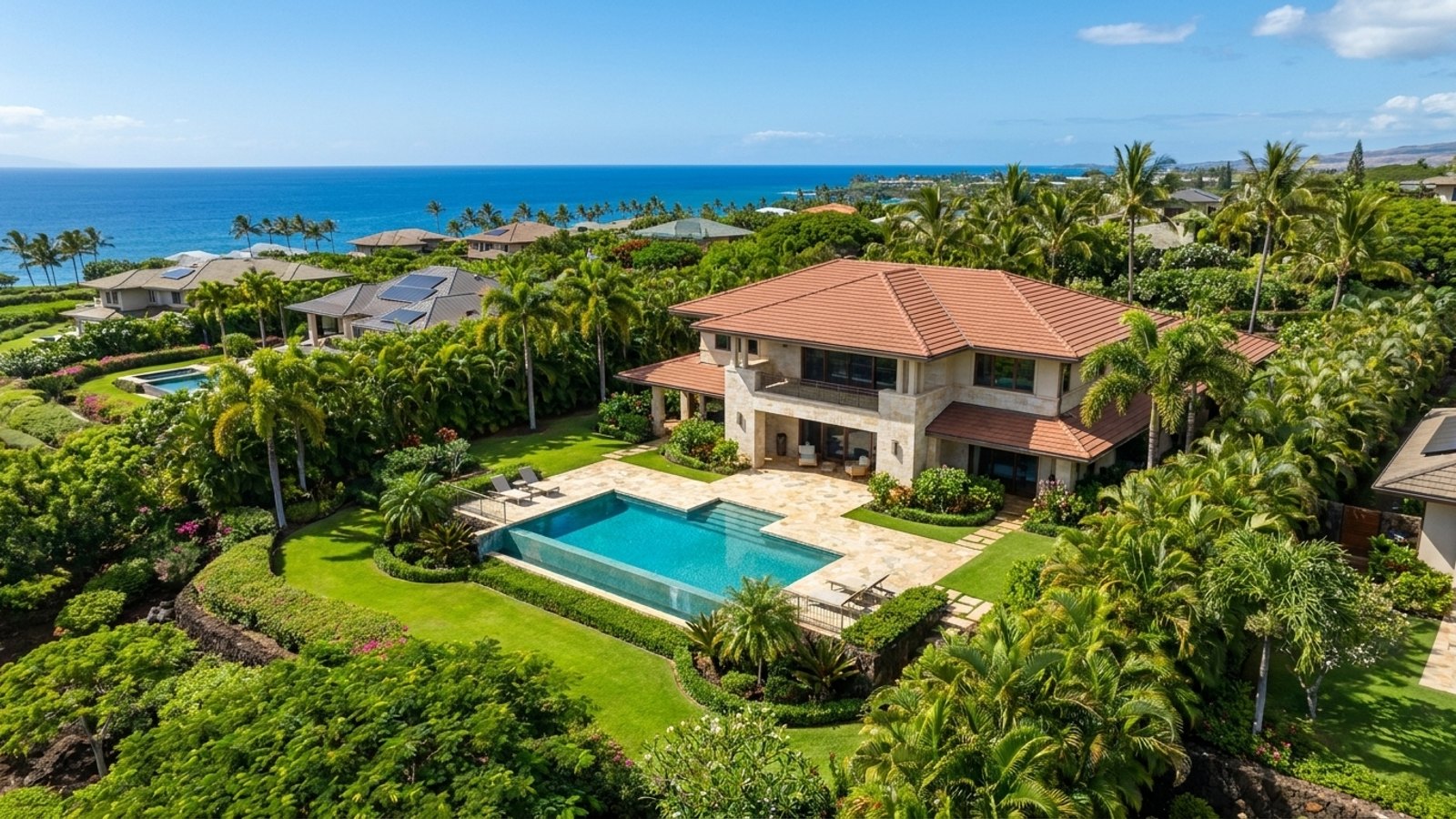
Buying a luxury home in Maui is not just about getting approved for a loan. It is about choosing a purchase structure that protects liquidity, strengthens your offer, and fits the way you actually manage wealth.
That matters even more in Maui, where high-value homes, resort condos, oceanfront properties, and second-home purchases can create financing issues that do not show up in a standard mortgage transaction. If you want to finance a luxury home purchase in Maui intelligently, you need to think beyond rate shopping and start with strategy.
Important Disclaimer
This article is for general educational purposes only and is not mortgage, lending, tax, legal, or financial advice. Loan programs, rates, underwriting standards, tax rules, and eligibility requirements change. Before financing a luxury home purchase in Maui, consult a qualified mortgage professional, CPA, attorney, and financial advisor.
Quick Answer
To finance a luxury home purchase in Maui, buyers typically compare jumbo loans, portfolio lending, private banking options, cash strategies, and asset-based financing. The best structure depends on purchase price, property type, liquidity goals, income documentation, condo eligibility, insurance, appraisal support, and intended use.
Key Takeaways
- Luxury home financing in Maui is often more complex than a standard mortgage because property type can affect approval as much as borrower strength.
- Cash can strengthen an offer, but financing may preserve liquidity, keep capital invested, and maintain flexibility.
- Jumbo loans are common for Maui luxury purchases because many homes exceed conforming loan limits.
- Portfolio loans and private banking options can help buyers with substantial assets but nontraditional income.
- Resort condos, hotel-zoned properties, and oceanfront homes may require extra lender review.
- A strong preapproval is not the same as full underwriting.
- Insurance, HOA documents, appraisal support, and occupancy classification can all affect closing.
- The smartest financing strategy should support both the purchase and the broader portfolio.
What does it mean to finance a luxury home purchase in Maui?
Financing a luxury home purchase in Maui means structuring funds for a high-value property through cash, mortgage financing, portfolio lending, private banking, or asset-based strategies while accounting for property type, liquidity, risk, and long-term ownership goals.
In practice, that means the financing conversation starts before you write the offer, not after.
Why is financing a Maui luxury home different?
Financing a Maui luxury home is different because the transaction is usually larger, the property may be more complex, and the buyer profile often falls outside standard underwriting boxes.
Many buyers are self-employed, retired, asset-rich, buying through trusts or entities, or purchasing second homes and vacation properties. At the same time, the property itself may raise issues involving appraisal, condo project approval, insurance, flood exposure, rental rules, or zoning.
The property matters as much as the buyer
A highly qualified buyer can still run into financing problems if the property does not fit the lender’s guidelines.
Common issues include:
- Condo project eligibility
- HOA reserve strength
- Insurance coverage
- Short-term rental activity
- Hotel-zoned or resort-use classification
- Flood zone concerns
- Limited comparable sales
- Unpermitted improvements
- Property condition
- Title or access issues
Financing strategy should start before the home search
Before touring serious options, I would want clarity on:
- Maximum comfortable purchase price
- Preferred down payment
- Liquidity needs after closing
- Closing timeline
- Personal use versus investment use
- Whether rental income matters to the plan
- Whether cash, financing, or a blended approach is more strategic
What is a jumbo loan for a Maui luxury home?
A jumbo loan is generally a mortgage that exceeds conforming loan limits and is underwritten outside standard agency guidelines. Because many Maui luxury homes are priced well above conforming thresholds, jumbo financing is often the most common path.
This is especially relevant in areas such as:
- Wailea
- Makena
- Kapalua
- Kaanapali
- Oceanfront Kihei
- Launiupoko
- Upcountry estate markets
What do jumbo lenders usually review?
Jumbo lenders often review more than income and credit. They may look closely at:
- Credit profile
- Debt-to-income ratio
- Cash reserves
- Asset statements
- Source of down payment
- Occupancy type
- Property type
- Insurance
- Appraisal quality
- Condo project approval, if applicable
- Rental use, if any
Questions to ask before choosing a jumbo lender
- What loan amount can I realistically qualify for?
- What down payment is required for this property type?
- How many months of reserves are needed?
- How do you underwrite self-employed or asset-based income?
- Do you finance Maui luxury condos?
- Do you finance vacation-rental or hotel-zoned properties?
- What property types do you exclude?
- How long does underwriting usually take?
- What commonly delays closing?
Before touring high-value Maui properties, it helps to know whether your likely purchase will require jumbo or portfolio financing and whether the lender is comfortable with the property categories you are considering.
When do portfolio loans and private banking make sense?
Portfolio loans can be a strong fit when a buyer has substantial wealth but does not fit conventional underwriting cleanly. These loans are typically held by the lender, which may allow more flexible review depending on the institution.
Portfolio or private banking options may fit buyers who:
- Have complex income
- Own multiple businesses
- Hold significant investable assets
- Want a nonstandard loan structure
- Need financing for a unique property
- Value a relationship-based lending approach
What should you watch for?
Portfolio flexibility can be useful, but it comes with details that should be reviewed carefully:
- Relationship asset requirements
- Reserve expectations
- Adjustable-rate structures
- Interest-only options where available
- Prepayment terms
- Cross-collateralization risk
- Coordination with overall portfolio strategy
If the property is unusual, a lender with real experience in Maui luxury transactions can make a major difference.
Cash vs. financing: which is better for a luxury Maui buyer?
Cash is not automatically the smartest way to finance a luxury home purchase in Maui. It can absolutely be powerful, but it is not always the best strategic choice.
Benefits of paying cash
Cash may help buyers:
- Strengthen offer terms
- Reduce financing contingencies
- Close faster
- Avoid appraisal-related loan issues
- Appeal to sellers who want certainty
- Reduce lender documentation burden
Reasons to finance instead
Financing may help buyers:
- Preserve liquidity
- Keep capital invested elsewhere
- Maintain portfolio flexibility
- Use leverage strategically
- Avoid selling assets at an unfavorable time
- Retain reserves for renovations, taxes, insurance, or future opportunities
A useful hybrid option
Some buyers choose to purchase with cash and explore delayed financing or other post-closing liquidity strategies later. That approach can work, but it should be discussed with the lender and advisory team before closing so there are no surprises around timing, eligibility, or documentation.
The right question to ask
“The best question is not simply ‘Can I pay cash?’ It is ‘What purchase structure best protects my liquidity, investment strategy, and negotiating position?’”
That is the real decision.
Should you choose a fixed-rate mortgage or an ARM?
The answer depends on your holding period, risk tolerance, and cash flow preferences.
Fixed-rate mortgage
A fixed-rate mortgage offers predictable principal and interest payments over the life of the loan.
It may fit buyers who value:
- Stability
- Long-term ownership
- Easier budgeting
- Less exposure to future rate changes
Adjustable-rate mortgage
An adjustable-rate mortgage may offer a lower initial rate, but the payment can change over time.
It may fit buyers who are considering:
- Shorter hold periods
- Future refinance plans
- Greater liquidity flexibility
- Comfort with rate adjustment risk
Questions to ask before choosing an ARM
- When can the rate first adjust?
- How often can it adjust after that?
- What are the caps?
- What is the highest possible payment?
- How long do I expect to keep the property?
- Can I afford the payment if rates move against me?
What if your income is complex or nontraditional?
Many luxury buyers do not fit the classic W-2 borrower profile. That does not mean financing is unavailable. It means documentation needs to be reviewed early.
This often applies to:
- Business owners
- Entrepreneurs
- Investors
- Retired executives
- Trust beneficiaries
- Buyers with significant assets but modest taxable income
Possible approaches may include:
- Asset depletion or asset utilization
- Bank statement programs
- Trust income review
- K-1 income analysis
- Investment income documentation
- Business financial review
- Private banking underwriting
The mistake is assuming strong net worth automatically means an easy file. Luxury financing requires preparation.
Are Maui luxury condos and resort properties harder to finance?
Sometimes, yes. Condo financing can be more complex because the lender may review both the borrower and the project itself.
What lenders may review in a condo project
- HOA budget
- Reserve funding
- Insurance coverage
- Owner-occupancy ratios
- Litigation
- Delinquencies
- Commercial use
- Special assessments
- Rental activity
- Building condition
- Warrantable versus non-warrantable status
Maui-specific resort condo issues
Extra review may be needed for:
- Hotel-zoned condos
- Vacation-rental-friendly properties
- Condotel-like projects
- Rental program participation
- High HOA fee structures
- Oceanfront insurance exposure
If you are considering a Maui resort condo, confirm financing eligibility before writing an offer so project-level issues do not become a closing surprise.
What about oceanfront homes and luxury estates?
Single-family luxury homes in Maui can bring a different set of underwriting questions.
Lenders may focus on:
- Appraisal support
- Flood zone status
- Insurance availability
- Property condition
- Permit history
- Shoreline issues
- Easements or access
- Unusual construction
- Lot size and zoning
- Comparable sales depth
Why appraisals can be challenging
Luxury appraisals are often harder because truly comparable sales may be limited. In markets where every home has a different view corridor, frontage, lot quality, and finish level, value becomes more nuanced.
That means buyers should understand appraisal risk early, especially if the purchase price is aggressive.
Why does occupancy classification matter?
Whether the home is a second home or an investment property can affect financing in a meaningful way.
Occupancy can influence:
- Down payment requirements
- Interest rate
- Reserve requirements
- Eligible loan programs
- Rental income treatment
- Insurance expectations
- Documentation standards
Many Maui buyers plan some mix of personal use and rental potential. That is common, but it should be disclosed clearly from the beginning to avoid underwriting issues later.
What documents should you prepare before making an offer?
The fastest way to strengthen your financing position is to prepare your file before you are under time pressure.
Buyer document checklist
- Government identification
- Tax returns
- Income documentation
- Business financials, if self-employed
- K-1s or partnership records
- Bank statements
- Investment account statements
- Proof of funds
- Trust documents, if applicable
- Entity documents, if applicable
- Credit authorization
- Existing real estate schedule
- Mortgage statements on other properties
- Rental income records, if relevant
Property document checklist
- Purchase contract
- Preliminary title information
- HOA documents
- Condo questionnaire
- Insurance information
- Property disclosures
- Appraisal access details
- Rental history, if relevant
- Permit records
- Flood zone information, if applicable
Common mistakes luxury Maui buyers should avoid
These mistakes can weaken offer strength, delay closing, or create avoidable stress.
- Waiting too long to speak with a lender
- Assuming cash is always the best answer
- Failing to confirm condo project eligibility
- Leaving insurance review until late in escrow
- Relying on gross rental income instead of net economics
- Choosing a lender without Maui luxury experience
- Not coordinating with a CPA, attorney, or financial advisor
- Underestimating post-closing liquidity needs
Reserves matter. Furnishings, repairs, taxes, insurance, HOA fees, staffing, maintenance, and travel can add up quickly after closing.
What is the process to finance a luxury home purchase in Maui?
There are seven practical steps.
Step 1: Define the purchase strategy
Clarify intended use, liquidity goals, target price, and timing.
Step 2: Compare financing paths
Evaluate cash, jumbo financing, portfolio lending, private banking, or a blended structure.
Step 3: Get fully reviewed
A prequalification is not enough for a serious luxury transaction. Have income, assets, and documentation reviewed in depth.
Step 4: Identify property-specific risks
Check condo eligibility, insurance, flood exposure, appraisal support, HOA issues, and title concerns.
Step 5: Structure the offer strategically
Align your financing contingency, proof of funds, down payment strength, and closing timeline with seller expectations.
Step 6: Manage escrow carefully
Coordinate appraisal, underwriting conditions, insurance, HOA documentation, and final funding.
Step 7: Protect post-closing liquidity
Plan for reserves, ownership costs, tax documentation, and long-term property management.
FAQ
How do you finance a luxury home purchase in Maui?
Most buyers compare jumbo loans, portfolio loans, private banking options, cash strategies, and asset-based lending. The right option depends on purchase price, liquidity goals, property type, income documentation, and intended use.
Is it better to pay cash or finance a Maui luxury home?
Cash can make an offer stronger and reduce closing risk, but financing may preserve liquidity and support broader investment goals. The better structure depends on portfolio strategy, taxes, timing, and risk tolerance.
Can I finance a Maui vacation rental property?
Possibly. Approval depends on property type, zoning, HOA rules, rental use, insurance, lender guidelines, and project eligibility if it is a condo.
Are Maui luxury condos harder to finance?
Some are. Lenders may review the project’s reserves, insurance, litigation, rental activity, owner occupancy, and warrantability in addition to reviewing the buyer.
Should I speak with a lender before looking at Maui luxury homes?
Yes. Early lender review helps clarify buying power, documentation needs, property restrictions, and offer strength before the right property appears.
Final Thoughts
The decision to finance a luxury home purchase in Maui should not be reduced to one question about rate or one assumption that cash is always better. A smart structure should protect liquidity, preserve investment flexibility, and fit the realities of the property you are buying.
Jumbo loans, portfolio lending, private banking, and cash strategies can all make sense in the right situation. The key is to evaluate them early, understand the Maui-specific risks, and build a financing plan that supports both the transaction and the larger wealth picture.
If you are preparing to finance a luxury home purchase in Maui, Romvari Realty can help you identify the property-specific questions to ask, coordinate with experienced local professionals, and move forward with a strategy that supports your goals before you make an offer.