
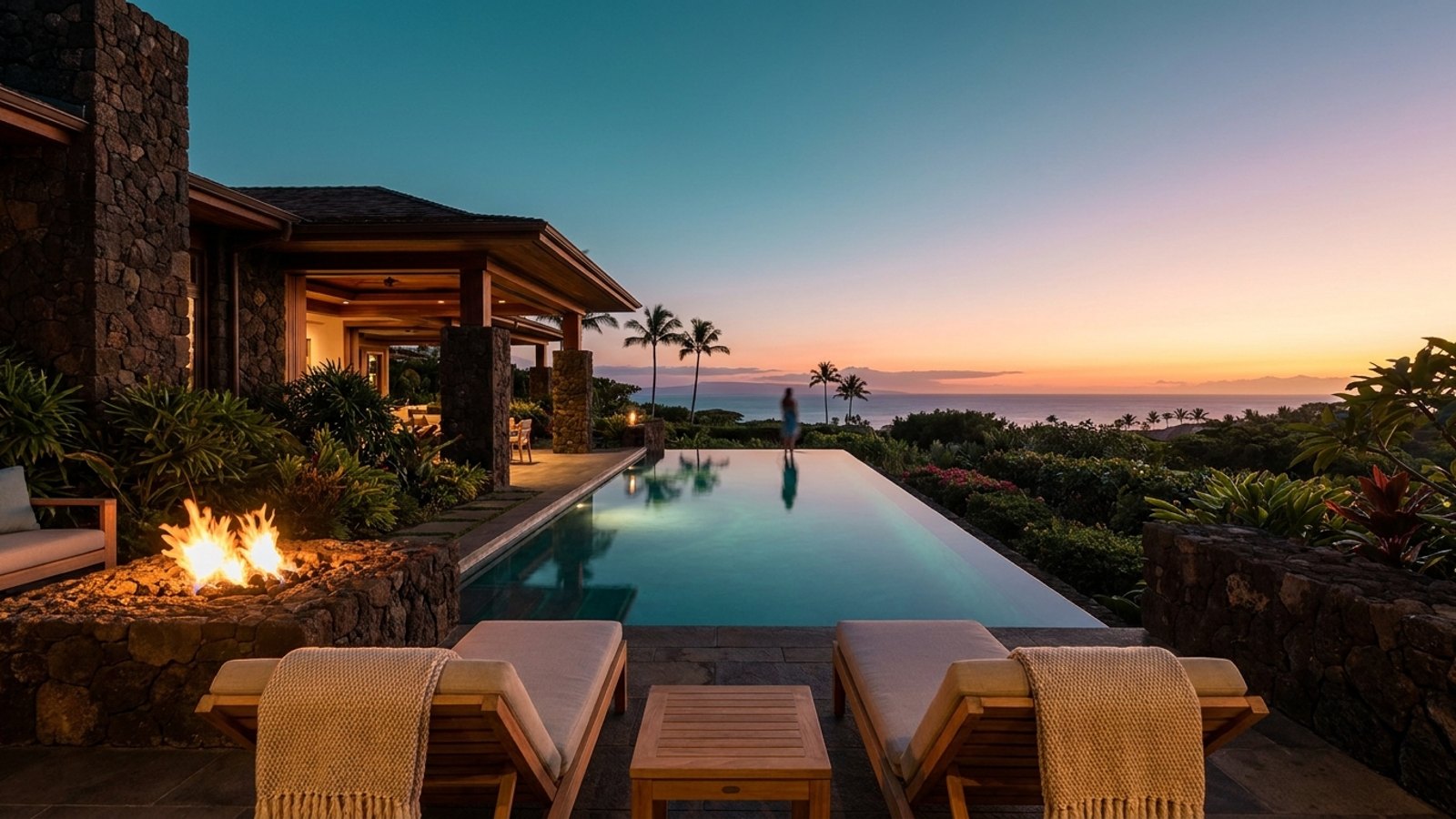
Selling a luxury home in Maui is not like selling an ordinary property. You are not just selling bedrooms, square footage, and a view. You are selling privacy, scarcity, identity, and a version of life the buyer wants to step into.
If you want to sell a luxury home in Maui without leaving money on the table, the strategy starts long before the listing goes live. The best results come from pricing with precision, presenting the home at a world-class level, and telling a story that makes the right buyer feel the property is worth the flight, the attention, and the offer.
Quick Answer
To sell a luxury home in Maui, start by identifying the most likely buyer, pricing the property strategically, preparing the home to remove objections, creating premium visuals, marketing beyond the MLS, and negotiating around certainty as much as price.
Key Takeaways
- Luxury buyers in Maui are often buying a lifestyle asset, not just a residence.
- The biggest marketing mistake is leading with features instead of the Maui life the home makes possible.
- Pricing is not a guess. It is a market-positioning decision.
- Many serious buyers are out-of-market, so your digital presentation must do the selling first.
- Maui luxury real estate is not one market. Wailea, Makena, Kapalua, Upcountry, and the North Shore attract different buyers.
- Small mistakes in preparation, documentation, or presentation can cost a seller significantly.
- The MLS matters, but luxury homes often require a broader distribution strategy.
- The right agent should bring submarket knowledge, pricing discipline, visual marketing, and strong luxury relationships.
What makes selling luxury homes in Maui different?
Selling luxury homes in Maui requires a different approach because buyers are not only comparing your property to local listings. They may also be comparing it to other elite lifestyle markets in Hawaii, California, mountain resort communities, and international destinations.
That changes everything. The buyer pool is smaller, more selective, and more demanding. A luxury listing has to communicate emotional value and practical value at the same time.
What are Maui luxury buyers really paying for?
Maui luxury buyers often care about more than the home itself. They are paying for a set of experiences and advantages that feel difficult to replace.
These value drivers often include:
- Ocean views
- Beach access
- Privacy
- Architecture and design
- Indoor-outdoor living
- Wellness and calm
- Resort access
- Lock-and-leave convenience
- Land and scarcity
- Legacy potential
- Rental flexibility where applicable
A home in Wailea may sell on polished resort living and convenience. A Makena estate may sell on rarity, privacy, and prestige. An Upcountry property may sell on acreage, climate, and a quieter version of island luxury.
Step 1: Define the right buyer before you market the home
The fastest way to weaken a luxury listing is to market it to everyone. Broad messaging usually creates generic marketing, and generic marketing makes exceptional homes feel ordinary.
Start by identifying who your property is most likely to attract.
Common Maui luxury buyer profiles
-
Lifestyle relocator
- Wants to live in Maui full-time
- Cares about comfort, daily convenience, community, and long-term livability
-
Second-home buyer
- Wants a beautiful escape
- Cares about ease, views, management, and low-friction ownership
-
Legacy estate buyer
- Wants a generational property
- Cares about land, privacy, architecture, and permanence
-
Investor buyer
- Cares about rental rules, taxes, carrying costs, and income potential
-
Prestige buyer
- Wants scarcity, status, design, and trophy appeal
A $4 million Upcountry estate, a Wailea resort residence, and a $12 million Makena oceanfront property should not be marketed with the same language, the same visuals, or the same buyer assumptions.
Step 2: Price the property based on strategy, not emotion
Luxury pricing in Maui requires discipline because direct comparable sales are often limited. Oceanfront position, view quality, land size, privacy, renovation level, and resort proximity can change value dramatically.
Pricing is not a guess. It is a market-positioning decision.
A strong pricing analysis should consider:
- Recent comparable sales
- Current competition
- Pending sales
- Days on market
- Price band demand
- View corridor and orientation
- Privacy
- Architecture and finish quality
- Beach or ocean access
- Renovation condition
- Rental eligibility or restrictions
- Carrying costs
- Seller timeline
Should you price high and negotiate down?
Sometimes sellers assume a high list price protects them. In reality, it can reduce urgency and cause strong buyers to wait.
In a selective market, an unrealistic price often sends the wrong message. If the listing tells the market the seller is disconnected from reality, the best buyers may not engage at all.
Step 3: Prepare the home so the value feels obvious
Luxury buyers notice details quickly. Deferred maintenance, visual clutter, or worn finishes can introduce doubt, even in a beautiful property.
Preparation is not about making the home bland. It is about making the value clear and the experience effortless.
Pre-listing preparation checklist
- Deep clean the home
- Declutter and simplify key spaces
- Remove overly personal items
- Repair visible wear
- Refresh paint where needed
- Service major systems, pool, spa, gates, and lighting
- Improve landscaping
- Clean lanais, decks, and outdoor entertaining areas
- Trim landscaping to preserve views
- Organize permits, surveys, HOA documents, and maintenance records
- Confirm rental, zoning, and tax-related information where relevant
Should you renovate before selling?
Renovate when the update removes a major buyer objection or clearly improves first impressions. Avoid major projects that delay the listing, create permit issues, or reflect overly personal taste.
In luxury real estate, not every improvement increases value. Some improvements simply reduce objections.
Step 4: Sell the Maui life the home makes possible
This is where most luxury marketing falls short.
Weak listing copy focuses on features. Strong luxury marketing connects the property to identity, emotion, and lifestyle.
Do not sell features. Sell the Maui life the home makes possible.
Here is the difference:
- Weak: “4-bedroom home with ocean views and pool.”
- Strong: “A private Wailea retreat designed for sunset dinners, effortless indoor-outdoor living, and quiet mornings overlooking the Pacific.”
Build the listing around one central idea
Every luxury home needs a clear positioning angle.
Examples:
- A private ocean-view estate minutes from Wailea’s best beaches
- A rare Makena retreat for buyers who value privacy, design, and direct connection to the ocean
- A Kapalua escape built for golf, entertaining, and dramatic Pacific views
- An Upcountry estate for buyers seeking acreage, calm, and a refined island lifestyle
Emotional drivers that help luxury listings convert
- Privacy
- Escape
- Scarcity
- Legacy
- Wellness
- Simplicity
- Entertaining
- Family connection
- Prestige
- Peace of mind
The goal is not to exaggerate. The goal is to articulate what the home feels like to own and live in.
Step 5: Invest in world-class visual presentation
A luxury buyer may discover your home online weeks before ever stepping onto Maui. That means the first showing happens digitally.
If the visual presentation feels ordinary, the home can be dismissed before the buyer ever asks a question.
What strong visual marketing should include
- Editorial-quality photography
- Sunset and daytime images
- Outdoor living areas
- Pool, spa, and lanai coverage
- Primary suite and entertaining spaces
- Architectural details
- Drone footage
- Cinematic video
- Floor plans
- 3D tours where appropriate
- A dedicated property website or presentation page
Why drone and video matter in Maui
Drone footage helps buyers understand lot lines, privacy, ocean proximity, and the relationship between the home and the surrounding landscape. Video helps remote buyers feel flow, scale, and atmosphere in a way still images cannot.
Step 6: Market beyond the MLS
The MLS is necessary, but it is not the full luxury strategy. Exposure alone is not the goal. Qualified exposure is the goal.
A stronger distribution plan may include:
- Maui MLS
- Luxury brokerage networks
- National and international listing platforms
- Direct outreach to top agents
- Private buyer databases
- Email campaigns
- YouTube and cinematic video distribution
- Social media retargeting
- Broker previews
- Private showings
- High-end print or digital collateral
Agent relationships matter here. Many luxury transactions begin with a trusted conversation before they become a public opportunity.
Step 7: Make private showings feel curated
Luxury showings should feel calm, private, and intentional. The environment matters because buyers are evaluating more than finishes. They are evaluating how the property makes them feel.
Showing checklist
- Lights on
- Comfortable temperature
- Best blinds and doors positioned for views
- Outdoor spaces spotless
- Pool and water features ready
- Entry sequence clean and inviting
- Personal items removed
- Valuables secured
- Feature sheet available
- Showing scheduled at the home’s best hour
Every luxury home has a best moment. For some it is sunset. For others it is morning light, cool trade winds, or the transition from indoor living to a glowing lanai in the evening.
Step 8: Be ready on disclosures, tax questions, and documentation
Luxury buyers and their advisors tend to ask better questions. Clean documentation builds confidence and reduces friction.
Be prepared with:
- Seller disclosures
- Permit history
- Survey if available
- HOA or association documents
- Renovation records
- Maintenance records
- Utility information
- Rental history if applicable
- Property tax classification details
- Zoning or rental-rule information where relevant
This guide is for general informational purposes only and is not legal, tax, or financial advice. Always consult qualified Hawaii real estate, legal, and tax professionals before making decisions.
Step 9: Negotiate around certainty, not just price
A strong luxury offer is about more than the headline number. Terms matter, and certainty matters.
Evaluate:
- Proof of funds
- Cash versus financing
- Contingencies
- Inspection timeline
- Closing schedule
- Earnest money
- Appraisal risk
- Furnishings and exclusions
- Rental booking considerations
- Seller leaseback needs
- Buyer motivation
Luxury sellers sometimes let emotion shape negotiation. That is understandable, especially when a property has personal meaning. But the strongest negotiating posture is calm, informed, and strategic.
Common mistakes Maui luxury home sellers should avoid
1. Overpricing based on emotion
Memories and investment matter to you. Buyers respond to market reality, competition, and perceived value.
2. Using ordinary marketing for an extraordinary property
Luxury homes need better positioning, stronger visuals, and more thoughtful distribution.
3. Ignoring the out-of-market buyer
Many serious buyers first encounter the property from thousands of miles away.
4. Failing to prepare the home
Visible maintenance issues create doubt about hidden issues.
5. Selling features instead of lifestyle
Luxury buyers often buy emotion, confidence, and identity along with the asset.
6. Weak documentation
Unclear permits, vague rental claims, or missing records can slow or weaken a sale.
7. Hiring based on familiarity instead of capability
Luxury representation should be chosen on strategy, execution, network, and negotiation skill.
FAQ About Selling a Luxury Home in Maui
What is the best way to sell a luxury home in Maui?
The best approach combines strategic pricing, high-level preparation, premium visuals, targeted marketing, strong documentation, and skilled negotiation. A luxury property needs more than exposure. It needs the right story and the right audience.
How do I price a luxury home in Maui?
Use recent comparable sales, active competition, submarket trends, view quality, privacy, architecture, condition, and buyer demand by price band. Luxury pricing should be precise and market-aware.
How important are photos and video?
They are critical. Many buyers first discover Maui luxury real estate online, and the visual presentation often determines whether they schedule a showing.
Should I renovate before selling?
Only when the improvement removes a major objection or clearly improves buyer perception. Avoid long, expensive projects with uncertain return.
How long does it take to sell a luxury home in Maui?
It depends on the price, location, condition, demand, and uniqueness of the property. Luxury homes often take longer than lower-priced homes because the buyer pool is smaller.
Final Thoughts
Selling a luxury home in Maui requires more than listing a beautiful property. It requires understanding what makes the home rare, who is most likely to value it, and how to present that value with precision.
If you only do three things, do these:
- Define the most likely buyer before you market the home
- Price with discipline, not emotion
- Tell a story about the lifestyle, privacy, and identity the property creates
Your home is not ordinary. Your selling strategy should not be either.
Request a Private Maui Luxury Home Valuation
If you want to sell a luxury property in Maui with a clear strategy, request a private valuation and selling consultation. I’ll help you understand your home’s likely buyer profile, current market position, and the best path to a confident sale.