
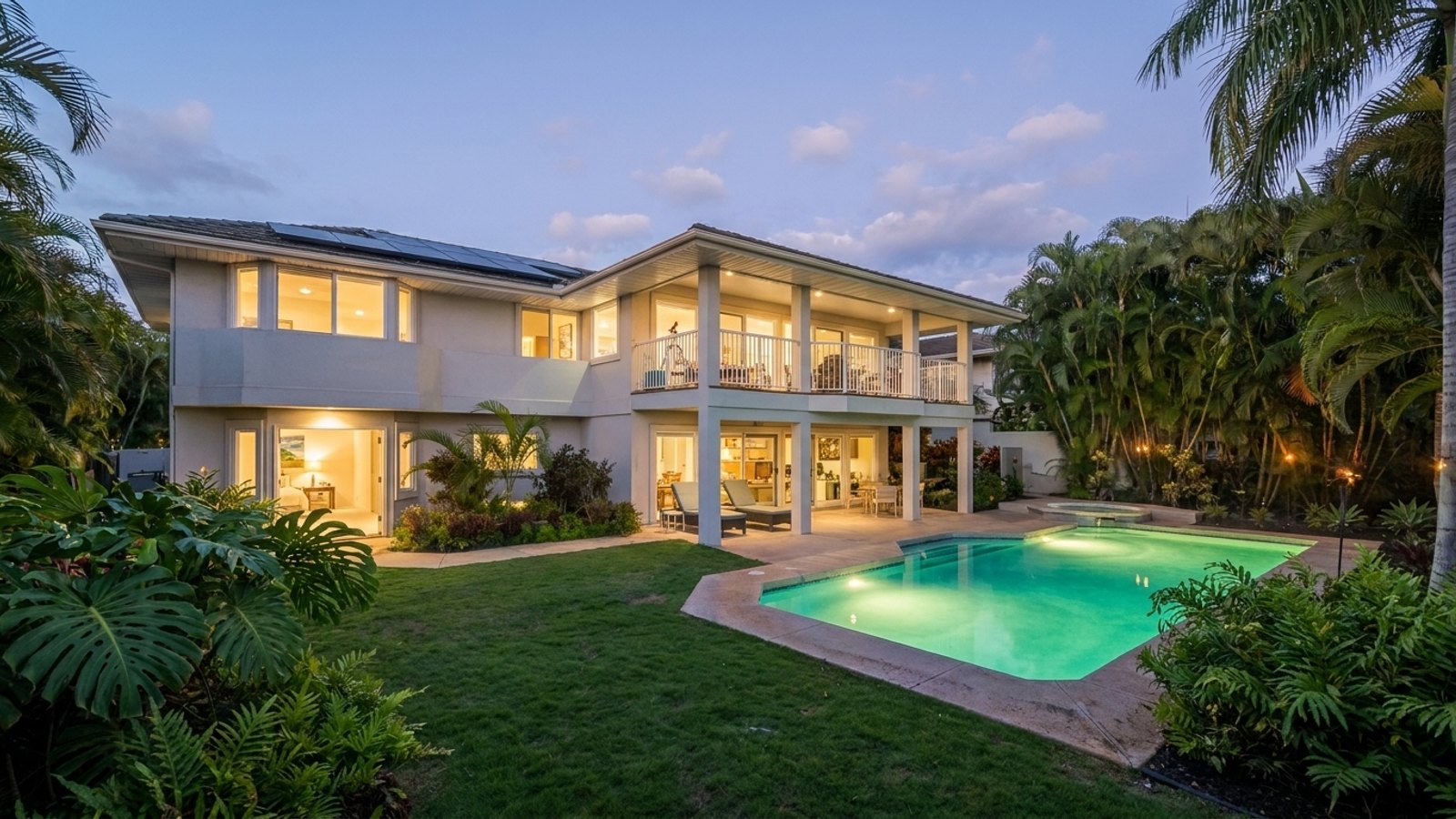
Marketing a luxury home in Maui takes more than beautiful photos, a polished MLS listing, and a few social posts. High-end buyers are selective, often comparing properties across multiple markets, and they make decisions based on far more than bedroom count or square footage.
If you want to protect equity, attract qualified buyers, and avoid unnecessary price reductions, your marketing strategy has to do more than create exposure. It has to create confidence. That starts with positioning, presentation, and one of the most overlooked elements in luxury home marketing strategies: price.
Key takeaways
- Luxury home marketing strategies are not just about promotion. They combine pricing, presentation, storytelling, buyer targeting, and follow-up.
- In luxury real estate, price is part of the marketing message because it shapes buyer interest, perceived quality, and negotiation leverage from day one.
- Maui luxury homes require a different strategy because the buyer pool is smaller, expectations are higher, and many buyers are off-island.
- Premium marketing assets should include professional photography, cinematic video, drone imagery, strong listing copy, and a dedicated property page.
- The goal is not maximum exposure alone. The goal is qualified exposure that supports premium positioning.
- Private marketing can be useful in some cases, but it should be balanced against visibility, competition, and price discovery.
- Luxury sellers should expect a clear reporting system, buyer qualification process, and a strategy that can adapt to market feedback.
What are luxury home marketing strategies?
Luxury home marketing strategies are the specialized pricing, presentation, storytelling, digital advertising, agent outreach, and buyer qualification methods used to sell high-value properties to the right qualified buyers.
They matter because luxury homes are not interchangeable. In Maui, every high-end property has its own mix of location, views, privacy, architecture, community, and lifestyle appeal. A generic marketing plan often misses the value story that justifies the price.
Why luxury home marketing requires a different strategy
Luxury marketing is different because the stakes are different. The buyer pool is narrower, the properties are more unique, and the financial decisions are larger.
A standard listing approach can create visibility, but visibility alone does not sell a luxury property well. The real job is to reach the right buyers with the right story, at the right level of presentation.
Luxury buyers do not shop like standard buyers
Luxury buyers tend to compare more carefully and move more deliberately. They often evaluate Maui properties against homes in California, Arizona, Florida, or other resort-driven markets.
They also notice flaws quickly. Weak staging, poor photography, vague copy, and questionable pricing can create hesitation almost immediately.
A luxury listing must sell the value story
A high-end listing should answer a few essential questions:
- Why this property?
- Why this location?
- Why now?
- What makes it difficult to replace?
- What lifestyle does it offer?
- Why is it worth the asking price?
If your marketing cannot answer those questions clearly, buyers will create their own assumptions, and those assumptions are rarely in the seller’s favor.
The foundation of luxury marketing is strategic positioning
The best luxury home marketing strategies begin before the listing goes live. You do not start with ads. You start with positioning.
Define the ideal buyer
Every luxury property has a likely buyer profile. In Maui, that could be:
- A mainland second-home buyer
- A high-net-worth retiree
- An oceanfront lifestyle buyer
- A resort residence buyer
- An investor focused on legal rental flexibility
- A family looking for a legacy property
- A privacy-focused estate buyer
The clearer the buyer profile, the stronger the marketing message becomes.
Match the message to the buyer
Different parts of Maui attract different motivations.
- Wailea often appeals to buyers who value resort convenience, polish, and beach proximity.
- Makena tends to attract buyers who want privacy, scarcity, and quiet luxury.
- Kapalua often resonates with buyers drawn to golf, retreat-like surroundings, and dramatic natural beauty.
- Kaanapali can appeal to buyers who want beachfront energy and walkable resort amenities.
- Upcountry often attracts those who value acreage, independence, and a different kind of luxury lifestyle.
The message should reflect what that buyer actually values, not just what the seller wants to emphasize.
Build the marketing around the strongest differentiator
Every luxury listing needs a central value proposition. That may be:
- Oceanfront position
- Protected views
- Gated privacy
- Architectural significance
- Turnkey condition
- Resort amenities
- Beach access
- Rental eligibility where legally allowed
- Land and legacy appeal
Choose the strongest differentiator and make it the anchor of the campaign.
Pricing strategy is part of the marketing strategy
Price is one of the first marketing messages buyers receive. Before they schedule a showing, before they ask for disclosures, and before they imagine themselves in the home, they see the number.
That number tells them what kind of opportunity this is, how serious the seller appears to be, and whether the property feels worth pursuing.
Why price shapes buyer behavior
Pricing affects:
- Buyer interest
- Showing quality
- Offer strength
- Days on market
- Perceived seller motivation
- Risk of future price reductions
- Negotiation leverage
An overpriced luxury home does not just sit. It starts sending the wrong message.
Price for the market, not just the goal
A seller’s desired net does not determine market value. Buyers compare the home against recent sales, active competition, and the broader alternatives available to them.
If a property is priced at a premium, that premium needs to be supported by:
- Location
- Condition
- Scarcity
- Views
- Privacy
- Design quality
- Presentation
If those elements are not clear, the price creates friction instead of confidence.
Use a range-based pricing conversation
A strong pricing strategy should define several ranges:
- A conservative market-supported range
- A likely sale range
- A premium positioning range
- An aspirational range that carries longer-market risk
This makes the conversation more strategic. It also helps the seller understand how pricing choices affect the marketing response.
Why overpricing hurts luxury marketing
Overpricing often leads to:
- Fewer qualified showings
- Buyer skepticism
- Longer days on market
- Reduced urgency
- Lowball offers
- Price reduction history
- Weaker leverage
Luxury buyers are highly sensitive to perceived misalignment. If the property feels overpriced, many will not engage at all.
Why underpricing can also be risky
Underpricing can attract attention, but it can also create the wrong kind of attention. It may weaken exclusivity, invite unqualified interest, or leave money on the table.
The goal is not to be high or low. The goal is to be credible, competitive, and strategically positioned.
Prepare the property before marketing begins
Marketing performs better when the property is fully prepared. Launching too early can weaken the entire campaign.
Focus on styling and presentation
Luxury preparation usually includes:
- Decluttering
- Depersonalizing
- Editing furniture
- Highlighting views
- Styling lanais and outdoor spaces
- Creating a calm, refined atmosphere
- Removing visual distractions
This is not about making a home feel generic. It is about making the value easier to see.
Handle repairs and maintenance first
Luxury buyers notice details quickly. Address visible issues such as:
- Paint touch-ups
- Worn hardware
- Salt-air wear
- Moisture or mildew signs
- Dirty glass
- Landscape neglect
- Pool or spa condition
- Lighting issues
- Sliders, screens, and doors that do not present well
Minor flaws can create outsized doubts at high price points.
Prepare the documentation
A luxury listing should feel organized and credible. Helpful materials include:
- Renovation records
- Maintenance history
- HOA documents
- Rental history where applicable
- Floor plans
- Survey or site plans
- Utility or carrying cost information
- Tax and ownership details
Prepared documentation reduces buyer hesitation and supports smoother negotiations.
Professional photography and video do the heavy lifting
For many Maui luxury buyers, the first showing happens online. That means your visual assets are not optional. They are core sales tools.
Photography should show the home and the lifestyle
Strong luxury photography should capture:
- View corridors
- Indoor-outdoor flow
- Arrival experience
- Primary living areas
- Entertaining spaces
- Pools, spas, and lanais
- Sunset orientation
- Community amenities where relevant
The goal is not just to show rooms. The goal is to show how the property lives.
Video helps off-island buyers understand the experience
Cinematic video is especially valuable in Maui because so many buyers are researching remotely before they travel.
A good video should communicate:
- Arrival sequence
- Flow and scale
- Light and atmosphere
- Privacy
- Connection to views
- Lifestyle rhythm
- Why the setting feels rare
A generic room-by-room pan is not enough. Video should tell a story.
Avoid common visual mistakes
Do not undermine the listing with:
- Dark interiors
- Overedited photography
- Distorted wide-angle shots
- Clutter
- Unclean windows
- Weak outdoor staging
- Missing drone imagery when context matters
High-end buyers read these details as signals of quality.
Listing copy should support premium positioning
Words influence value perception. Luxury listing copy should be specific, elegant, and buyer-aware.
Use precise details instead of vague hype
Avoid empty phrases like:
- Must see
- Paradise
- Dream home
- Luxury living at its finest
- Rare opportunity without proof
Use language that explains real value:
- View orientation
- Beach proximity
- Architectural detail
- Renovation quality
- Ownership ease
- Privacy
- Community reputation
- Outdoor living
- Scarcity
Specificity builds trust. Hype creates resistance.
Digital marketing for luxury homes should be targeted
A sophisticated digital strategy supports the listing, but it should never feel noisy or generic.
Build a dedicated property page
A luxury listing benefits from a standalone page that includes:
- Hero photography
- Property video
- Feature highlights
- Lifestyle narrative
- Floor plan
- Community context
- Gallery
- Brochure request
- Private showing inquiry
This gives serious buyers a polished place to evaluate the opportunity.
Use digital advertising strategically
Paid exposure can be effective when it is targeted well. Useful channels may include:
- Google Search
- Google Display
- YouTube
- Retargeting campaigns
Retargeting is especially useful because many luxury buyers research over time. Staying visible to engaged prospects can help preserve momentum.
Social media should support, not replace, the strategy
Social media is helpful for awareness and storytelling, especially on visual platforms. But it is not the whole plan.
A strong strategy still needs:
- Correct pricing
- Premium assets
- Agent outreach
- Email marketing
- Buyer follow-up
- Showing management
- Seller reporting
Agent networks and private exposure still matter
Not every luxury buyer is actively browsing public listings every day. Many come through relationships.
Agent-to-agent marketing is often overlooked
Luxury buyers frequently appear through:
- Local agents
- Mainland referral partners
- Past client networks
- Wealth advisors
- Attorneys
- Private bankers
- Property managers
- Community-specific relationships
This is why broker outreach, direct calls, targeted email, and private previews still matter.
Private marketing can be smart when used selectively
Private and discreet marketing can be useful when:
- The seller values privacy
- The home is ultra-high-end
- Controlled exposure is preferred
- Showings should be limited to qualified buyers
- The seller is a public figure
- The property is tenant-occupied
But private marketing should be strategic, not automatic. Reduced exposure can also reduce competition and price discovery.
Buyer qualification protects time, privacy, and leverage
A luxury home should not be shown casually. The higher the price point, the more important qualification becomes.
Prequalify before private showings
Depending on the property, it may make sense to request:
- Proof of funds
- Strong preapproval
- Timeline clarity
- Intended use
- Familiarity with Maui
- Advisor involvement
- Contingency expectations
This protects the seller’s time and creates a more professional process.
Track quality, not just quantity
For luxury listings, quality matters more than volume. The right questions are:
- Are the inquiries qualified?
- Are buyers in the right price range?
- Are agents bringing real prospects?
- Are the same objections repeating?
- Is price aligned with feedback?
A luxury campaign does not need thousands of clicks. It needs the right buyers engaging for the right reasons.
Common luxury home marketing mistakes
Here are the mistakes I see most often:
- Using standard listing photos for a high-value home
- Launching before the home is fully prepared
- Overpricing and calling it “testing the market”
- Marketing features instead of lifestyle
- Ignoring the ideal buyer profile
- Relying too heavily on public-facing marketing alone
- Failing to qualify buyers
- Having no follow-up or reporting system
- Refusing to adjust when the market gives clear feedback
These mistakes do not just reduce activity. They can damage perceived value.
What should a luxury real estate marketing plan include?
A complete luxury marketing plan should include:
- Buyer profile definition
- Market-supported pricing strategy
- Property preparation and styling
- Professional photography
- Cinematic video
- Drone imagery
- Listing copy
- Dedicated property page
- Digital advertising
- Email marketing
- Agent and referral outreach
- Buyer qualification
- Seller reporting
- Strategy adjustments based on market response
That is what separates a true luxury marketing plan from a standard listing package.
Final thoughts
The best luxury home marketing strategies in Maui begin long before the listing goes live. They are built on a clear value story, refined presentation, qualified exposure, and pricing that supports the home’s position in the market.
Most importantly, pricing should never be treated as separate from marketing. It is one of the first and most powerful messages buyers receive. It shapes how they view the home, how seriously they engage, and whether they feel confident enough to act.
If you are preparing to sell a luxury home in Maui, focus on the full system: pricing, preparation, photography, video, copy, digital visibility, agent relationships, qualification, and follow-through. When those elements work together, marketing does more than generate attention. It protects leverage, supports perceived value, and creates a better selling experience from launch to closing.