
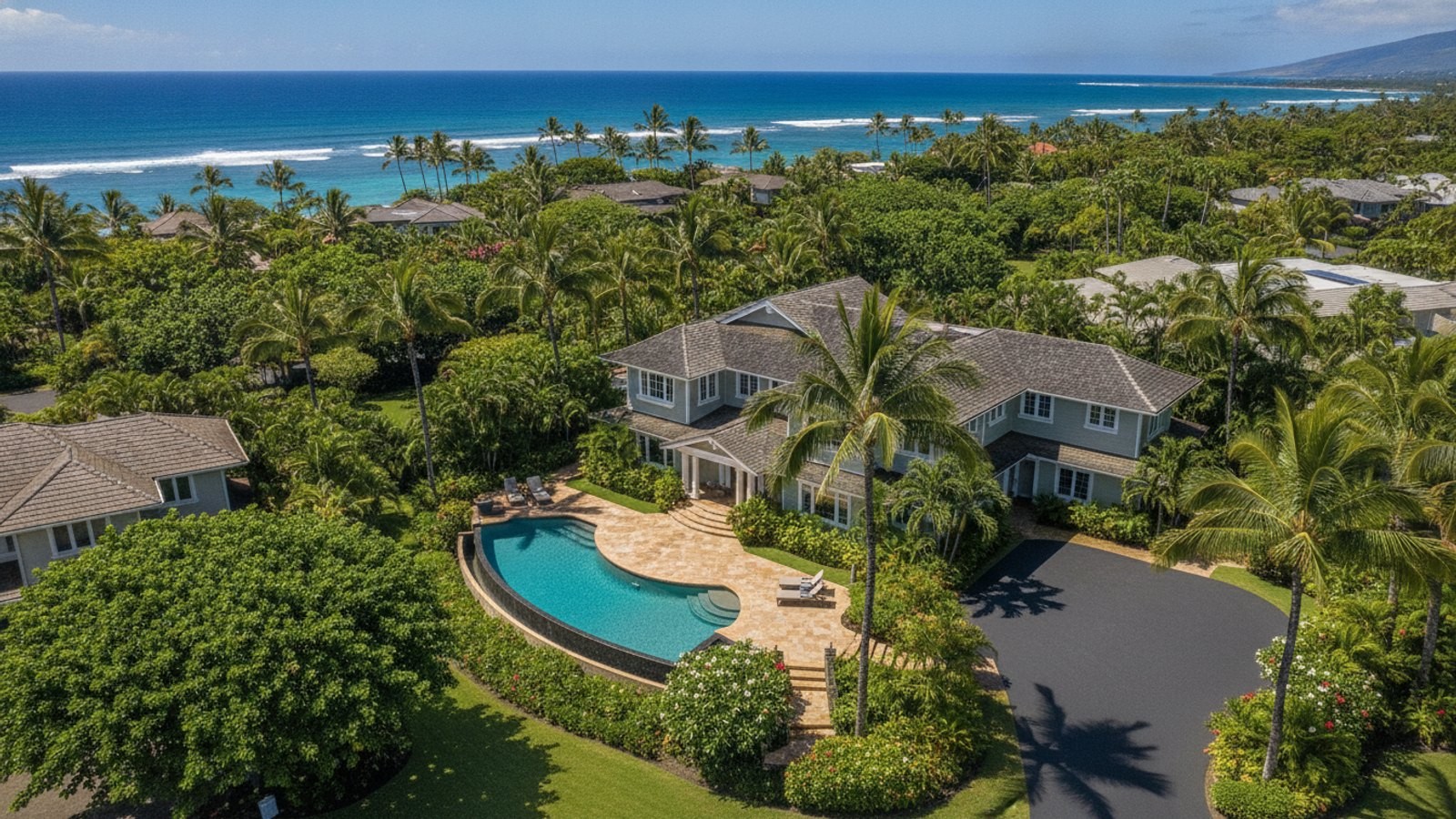
If you're selling a home on Maui, the asking price does more than signal value. It also controls who actually sees your listing.
A home priced at the wrong number can disappear from buyer searches before anyone even decides whether they like it. That’s why a smart pricing strategy for selling a home in Maui is not just about comps and market trends. It’s also about search behavior, buyer psychology, and how people shop in real life.
Quick Answer: What Is the Best Pricing Strategy for Selling a Home in Maui?
The best pricing strategy for selling a home in Maui is to price against your true micro-market and the way buyers are actively searching. That means using relevant sold comps, current active competition, pending activity, days on market, condition, view, tenure, and local demand.
It also means avoiding prices that sit just above common search cutoffs. If your number falls outside the filters buyers are using, your home can lose visibility right when first-week momentum matters most.
Key Takeaways
- Maui pricing should be based on micro-market data, not island-wide averages.
- Buyers often search in price bands, and that affects whether they ever see your listing.
- Pricing just above a major threshold can reduce exposure to qualified buyers.
- The first 7 to 14 days on market are usually the most important.
- Active listings matter just as much as sold comps because they show today’s competition.
- View, tenure, condo rules, fees, and condition can all change value dramatically on Maui.
- A strong pricing strategy protects both time on market and sale price.
- The goal is not to name the highest possible number. The goal is to choose the number most likely to create serious buyer activity.
Why Search Thresholds Matter More Than Most Sellers Realize
Buyers do not browse the market one home at a time. They search in ranges.
They set saved searches. They choose a district like Kihei, Wailea/Makena, Kula, Haiku, Wailuku, or Kapalua/Napili. Then they layer on filters for price, beds, baths, property type, and sometimes view or tenure. So, if your home is priced just above a major threshold, well, you may be invisible to a big slice of your buyer pool.
Here’s the practical example:
- A home at $1,005,000 may miss buyers searching up to $1,000,000
- A condo at $705,000 may miss buyers capped at $700,000
- A luxury property at $3,050,000 may miss buyers filtering at $3,000,000
That small difference can cost you attention during the exact window when your listing is freshest.
Why This Matters So Much on Maui
Maui buyers are often highly specific. They’re not casually scrolling everything on the island.
A buyer looking for a South Maui condo in Kihei may already be comparing monthly dues, rental rules, and walkability to the beach. A buyer shopping Upcountry in Kula or Pukalani may care more about lot size, privacy, climate, and views. A Wailea buyer may be comparing resort proximity, finish level, and ocean orientation. So, if your home doesn’t show up in the filtered range they set, you’re out before the conversation starts.
Maui Is Not One Market
This is where generic pricing advice falls apart.
A pricing strategy for selling a home in Maui has to respect the fact that Maui is a collection of micro-markets. Kihei condos do not behave like Wailea luxury homes. Makawao and Pukalani are different from Haiku. Lahaina/Kaanapali and Kapalua/Napili have their own rhythm. Kahului and Wailuku often attract a different buyer than Paia or Hana.
Even within the same area, pricing can shift based on:
- Fee simple vs. leasehold
- Oceanfront vs. garden view
- Short-term rental eligibility
- AOAO or HOA fees
- Insurance concerns
- Building condition
- Renovation quality
- Floor level
- Privacy
- Parking
- Outdoor space
That’s why two homes with similar square footage can still have very different pricing strategies.
How Buyer Search Behavior Should Affect Your Price
The decision rule is simple:
- If your ideal price is just over a major buyer cutoff, consider whether dropping below that threshold creates more visibility
- If demand is thin, wider exposure usually matters more than squeezing past a psychological price band
- If your home is rare and buyer demand is deep, you may have more room to hold a premium price
This is not about underpricing. It’s about positioning.
For example, let’s say your analysis suggests your likely range is between $985,000 and $1,015,000. In that case, pricing at $999,000 may create stronger visibility than pricing at $1,005,000. You are not giving away value. You are making sure the right buyers actually see the home and step through the door.
The First Two Weeks Are Everything
A new listing gets the most attention right away.
Saved-search buyers receive alerts. Agents with active clients notice it. People who have been waiting for the right home in the right area finally click. That early burst of visibility is one of your biggest advantages.
If the home feels overpriced from day one, momentum drops fast. And then buyers start asking the question every seller wants to avoid: Why is it still sitting?
That’s when you risk becoming a stale listing.
What Data You Need Before Setting Your Price
A good list price starts with evidence. On Maui, I would want to look at these first:
- Recent sold listings in the same district, subdivision, or condo project
- Current active listings competing for the same buyer
- Pending listings, if available, to spot where demand is landing now
- Expired or withdrawn listings to see what the market rejected
- Days on market trends
- List-to-sale price ratio
- Recent price reductions nearby
- Property condition compared with the competition
- View quality and orientation
- Fee simple or leasehold status
- Short-term rental rules, if relevant
- AOAO dues, HOA fees, reserves, and assessments for condos
Sold comps tell you where the market has been. Active and pending listings tell you what buyers are doing now.
The 5 Maui-Specific Value Drivers Sellers Should Never Ignore
1. View Quality
On Maui, view matters. A lot.
A direct ocean view, bi-coastal view, sunset orientation, or true oceanfront setting can create a major premium over a similar property facing a parking area or another building.
2. Tenure
Fee simple and leasehold should never be treated like equal comps.
Tenure affects financing, demand, resale value, and buyer comfort. If you price a leasehold property like fee simple, you’re likely starting from the wrong number.
3. Short-Term Rental Potential
For many condo sellers, rental eligibility is part of the value story.
But that value depends on zoning, building rules, county policy, and buyer confidence around future use. Always verify the current rules before leaning too heavily on rental potential in your pricing.
4. Monthly Ownership Costs
AOAO dues, HOA fees, insurance costs, and special assessments can absolutely influence buyer behavior.
Two similar condos can perform very differently if one has stronger reserves, lower dues, or fewer financial concerns in the building.
5. Condition and Presentation
Not every improvement adds value, but presentation changes perception fast.
The upgrades that often matter most are:
- Deep cleaning
- Decluttering
- Paint
- Lighting
- Minor repairs
- Landscaping touch-ups
- Staging
- Professional photography
The real question is not, "How much can I fix?" It’s, "What will make buyers feel this home is worth the asking price?"
Common Maui Pricing Mistakes
Pricing Based on Emotion
I get it. Some homes hold decades of memories, family history, and a lot of life.
But buyers compare your property to alternatives, not to your personal story. You can honor what the home has meant to you and still price it according to the market you’re in now.
Using the Wrong Comparable Sales
This happens all the time.
A seller looks at a nearby sale but misses key differences like view, condition, fee simple vs. leasehold, rental eligibility, or building quality. On Maui, those details are not minor. They can change value significantly.
Testing the Market Too High
Pricing high and reducing later sounds safe, but it often works against you.
You risk:
- Fewer showings
- Less urgency
- Longer days on market
- More buyer skepticism
- Harder negotiations later
Ignoring Search Thresholds
This is one of the easiest mistakes to avoid.
A small jump over a major price filter can quietly shrink your audience. If your home should compete in the under-$1M or under-$2M search band, that visibility can be more valuable than the extra few thousand on paper.
How to Know If Your Maui Home Is Priced Too High
Your Maui home may be overpriced if:
- You get very few showings in the first 7 to 14 days
- Buyers are viewing it online but not asking questions
- Similar homes are going pending first
- Feedback keeps mentioning price
- Agents say the value feels off compared with active competition
- You have interest, but no offers
- Nearby listings are reducing and you’re still not gaining traction
The market usually gives signals early. The key is to read them honestly.
Should You Leave Room to Negotiate?
Yes, but not so much that you price yourself out of the search.
That’s the part sellers sometimes miss. Negotiation room sounds smart until it pushes the property into the next price bracket and cuts off visibility. The strongest negotiating position usually comes from buyer interest, not from an inflated starting point.
If you want leverage, create competition. And the best way to create competition is to be seen by the right buyers at the right moment.
A Simple Pricing Framework I’d Use
If you’re trying to decide where to land, here’s a practical sequence:
Step 1: Define the goal
Ask yourself what matters most:
- Highest possible price
- Faster timeline
- Predictability
- Minimal prep
- Smooth relocation
- Selling as-is
Step 2: Find your true competitive set
Look for properties similar in:
- District
- Neighborhood or building
- Property type
- Size
- View
- Condition
- Tenure
- Amenities
- Time of sale
Step 3: Compare sold, active, pending, and failed listings
Each one tells a different story:
- Sold = what buyers paid
- Active = what buyers can choose now
- Pending = what’s attracting offers
- Expired = what didn’t work
Step 4: Check search thresholds
Ask: would pricing slightly below a major cutoff give the home stronger visibility?
Step 5: Launch with purpose
The first price should be strategic, not experimental.
If You Only Do 3 Things Before Listing, Do These
- Review your home against current active competition, not just old sold comps
- Check whether your target price lands just above a major buyer search threshold
- Be honest about condition, presentation, and how the home will feel next to similar listings
Final Takeaway
The right list price on Maui is not just about what your home is worth in theory. It’s about how buyers will find it, compare it, and respond to it in real time.
That’s why a strong pricing strategy for selling a home in Maui has to combine local comps with buyer search behavior. Price for the market you are in, price for the way people actually shop, and price where your home can be seen.
If you’re thinking about selling, start with a custom Maui market report or request an instant property valuation so you can price with clarity instead of guesswork.
FAQ
What is the best pricing strategy for selling a home in Maui?
The best pricing strategy for selling a home in Maui is to use hyperlocal data from your specific neighborhood, condo project, or micro-market. Review sold comps, active competition, pending activity, days on market, condition, view, tenure, and buyer demand before choosing a number.
Why do search thresholds matter when pricing a Maui home?
Search thresholds matter because buyers often set maximum price filters in saved searches. If your home is priced just above a common cutoff, it may not appear in those results, which can reduce visibility during the most important early days on market.
Should I price my Maui home high and reduce later?
Usually, that’s risky. The strongest attention tends to happen when a listing is new. If buyers see the home as overpriced from the start, you can lose momentum, get fewer showings, and face tougher negotiations later.
How do I know if my Maui home is overpriced?
Look at showing activity, buyer feedback, online engagement, and how similar homes are performing. If comparable listings are getting offers while yours is sitting, pricing may be part of the problem.
Do Maui condos need a different pricing strategy than houses?
Yes. Condo pricing should factor in the exact building, view, floor level, AOAO dues, reserves, amenities, rental rules, parking, and insurance concerns. Broad condo averages are usually too general to be useful.
Does fee simple vs. leasehold affect value?
Absolutely. Fee simple and leasehold properties should not be compared as equal without careful adjustment. Tenure affects demand, financing, perceived risk, and resale value.
How quickly should I adjust my price if there’s no activity?
Review results in the first 7 to 14 days. If showings are weak, feedback is negative, or similar homes are moving faster, a strategic adjustment may make sense before the listing starts to feel stale.
Are online home estimates reliable on Maui?
They can be a starting point, but they often miss important Maui-specific factors like view, tenure, building differences, rental eligibility, topography, privacy, and condition. They’re rarely enough on their own to set an effective list price.