
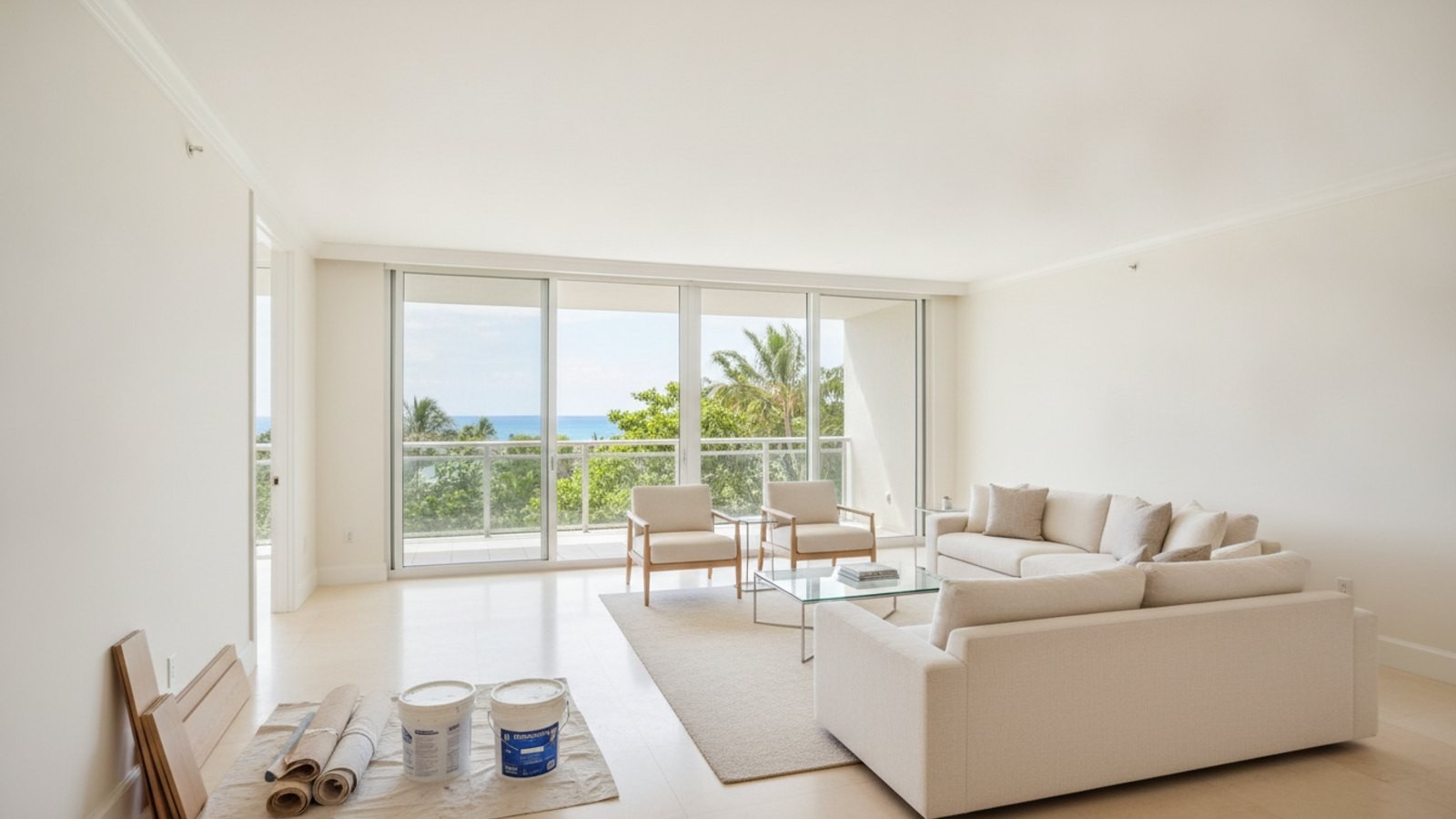
If you’re getting ready to sell your condo, it’s really tempting to start spending. New counters, new floors, new fixtures, maybe a full refresh because it feels like that should lead to a higher sale price.
But one of the costliest mistakes I see is upgrading the wrong things. The goal is not to make your condo perfect. The goal is to make it appealing, well-positioned, and easy for buyers to say yes to.
Quick Answer: What are the steps to prepare a condo for sale?
The essential steps to prepare a condo for sale are:
- Get a realistic property valuation.
- Compare your unit to recent sales in the same building or area.
- Review HOA fees, rules, and any special assessments.
- Fix visible and functional issues first.
- Declutter and depersonalize the space.
- Deep clean everything, especially windows, sliders, and the lanai.
- Improve lighting, airflow, and first impressions.
- Stage the rooms buyers care about most.
- Decide what is included in the sale.
- Gather HOA, rental, and property documents before listing.
- Prepare for professional photography and remote buyers.
- Avoid major upgrades unless the market clearly supports them.
For Maui condo sellers, building-specific sales matter far more than broad island-wide averages.
What does it mean to prepare a condo for sale?
A condo pre-listing plan is a step-by-step process for improving condition, presentation, documentation, and pricing before your unit goes on the market.
It matters because buyers aren’t only evaluating your condo. They’re also looking at the building, HOA fees, amenities, rules, rental potential, and monthly carrying costs.
Why condo preparation matters more than most sellers think
The first week your condo hits the market matters a lot. That’s when new listing alerts go out, active buyers are watching closely, and your photos and price are doing the heavy lifting.
If the condo feels clean, bright, and easy to understand, buyers lean in. If it feels confusing, overdone, dated, or overpriced, they start looking for reasons to negotiate.
And on Maui, this gets even more specific. A Kihei condo, a Wailea condo, a Kapalua condo, and a Lahaina/Kaanapali condo may all attract completely different buyers with different expectations.
1. Start with a realistic condo valuation
The first step is not paint. It’s not staging. It’s not choosing new bar stools for the kitchen.
The first step is understanding what your condo is actually worth in today’s market.
A strong valuation should look at:
- Recent sold condos in the same building
- Current active competition
- Pending listings when available
- Floor level
- View quality
- Condition and renovation level
- Lanai size and usability
- Parking and storage
- Fee simple vs. leasehold
- HOA fees
- Special assessments
- Vacation rental eligibility
Two units in the same complex can have very different values. Ocean view versus garden view, turnkey versus dated, top floor versus lower floor, legal short-term rental versus restricted use — all of that can move the number.
Before you spend money, get an instant property valuation or create a custom Maui market report so you’re making decisions from real market data, not guesswork.
2. Compare your condo to the right comps
This is where a lot of sellers get off track.
Looking at Maui-wide averages might sound useful, but buyers don’t shop that way. They compare your condo to similar units in the same building, nearby complex, or same buyer category.
Here’s the simple rule:
- Weak comp: island-wide median condo price
- Better comp: recent sales in your building
- Weak comp: price per square foot alone
- Better comp: price, view, condition, rental status, fees, and floor level together
If you own in places like Wailea Ekahi, Honua Kai, Keala O Wailea, Kihei Alii Kai, or Villas at Kenolio, the real story is at the project level.
That’s why building-specific market reports are so useful. They show what is active, under contract, and sold in the place buyers are actually comparing you against.
3. Review HOA fees, rules, and special assessments early
Buyers don’t just buy the unit. They buy into the monthly fees, the rules, the reserves, the amenities, and the financial health of the building.
Review these early:
- Current HOA fee
- What the fee covers
- House rules
- Pet rules
- Parking rules
- Rental rules
- Recent meeting minutes
- Reserve information
- Insurance details
- Planned maintenance
- Pending or approved special assessments
Do HOA fees affect condo sale price?
Yes. HOA fees affect affordability, which affects buyer demand. Higher fees can reduce the pool of buyers, but solid amenities, strong reserves, and good maintenance can help justify the cost.
On Maui, buyers also want clarity on things like short-term rental rules, utility inclusions, resort fees, and any recent policy changes that may affect use.
4. Decide what to repair before selling
Not every repair is worth doing. Not every upgrade pays you back.
The best pre-listing repairs are the ones that remove buyer objections.
High-priority fixes
These should move to the top of the list:
- Leaks or plumbing issues
- Electrical problems
- Broken appliances
- AC issues
- Sticky sliders
- Damaged flooring
- Mildew, mold, or water stains
- Broken lights or fans
- Lanai door issues
- Loose railings or safety concerns
Cosmetic fixes with strong return
These are often worth doing because they help both photos and showings:
- Fresh neutral paint
- New cabinet hardware
- Recaulking showers and sinks
- Cleaning or replacing stained grout
- Updating light fixtures
- Touching up trim and baseboards
- Replacing worn linens or bedding
- Swapping out tired curtains or blinds
Commonly ignored condo issues
These small things matter more than sellers expect:
- Salt-air rust
- Musty smells
- Old lanai furniture
- Loud ceiling fans
- Cloudy mirrors
- Damaged screens
- Dim lighting
- Worn entry details
5. Know what not to upgrade
This is the step that can save you the most money.
Some sellers spend heavily on improvements buyers will not repay. That usually happens when the renovation reflects personal taste more than market demand, or when the finish level goes beyond what the building supports.
Should you renovate your condo before selling?
Only if the improvement is likely to increase buyer appeal, reduce objections, or support a higher sale price based on comparable sales.
Before doing a major upgrade, ask:
- Will this show up in photos?
- Will it remove a buyer concern?
- Is this expected at my price point?
- Do similar sold units support the added cost?
- Is the improvement allowed by the HOA?
- Would paint, lighting, cleaning, and staging do more for less?
In many cases, sellers get a better return from cleaning, repairs, paint, lighting, and presentation than from a major remodel.
6. Declutter, depersonalize, and create more visual space
Condos can feel small fast. Every extra chair, stack, basket, and countertop appliance adds visual weight.
A good rule is to remove 30% to 50% of visible belongings before listing.
Focus on clearing out:
- Excess furniture
- Personal photos
- Packed closets
- Kitchen clutter
- Old beach gear
- Bulky storage items
- Personal paperwork
- Extra linens and towels
- Dated decor
Buyers want to imagine themselves in the space. They want to feel the breeze from the lanai, see where they’d have coffee, picture guests staying over, or imagine locking up and heading to the beach.
7. Deep clean like a buyer is looking for flaws
Cleanliness creates trust. Dirt creates questions.
Your condo should feel fresh, cared for, and easy to maintain.
Deep clean these areas:
- Windows and sliding glass doors
- Lanai railings and furniture
- Ceiling fans
- Air vents
- Baseboards
- Tile grout
- Shower glass
- Mirrors
- Appliances
- Cabinet interiors
- Closet floors
- Under sinks
- Washer/dryer area
- Entryway
On Maui, pay extra attention to salt-air residue, mildew, sand, corrosion, and that closed-up musty smell that can happen in vacant or part-time occupied units.
8. Improve light, airflow, and the feeling of the space
A condo shows better when it feels open, bright, and breathable.
Do this:
- Replace burned-out bulbs
- Use consistent warm-white or natural-white bulbs
- Open blinds and curtains
- Clean windows thoroughly
- Remove heavy window coverings if they block the view
- Make sure ceiling fans work
- Air out the unit before showings
- Use the lanai as a lifestyle feature, not storage
If your condo has an ocean, mountain, golf course, or sunset view, that feature should be obvious the second someone walks in.
9. Stage the rooms that carry the most value
You do not always need full staging. You do need the right focus.
Stage these spaces first
- Entryway: clean, simple, welcoming
- Living room: arranged to highlight the view or lanai
- Kitchen: clear counters, clean surfaces, minimal accessories
- Bedrooms: crisp bedding, restful feel, less furniture
- Bathrooms: fresh towels, clean glass, no personal toiletries
- Lanai: tidy, usable, relaxed
For vacation rental condos, turnkey presentation matters. Buyers often place value on convenience, especially if the furniture, linens, and setup feel clean and ready to use.
10. Decide what stays with the condo
This is one of those details that seems small until it creates confusion.
Decide early whether the condo is being sold:
- Furnished
- Partially furnished
- Unfurnished
Also clarify:
- Whether linens, dishes, and decor are included
- Whether beach gear stays
- What appliances are included
- Whether any items are excluded
- Whether there is an inventory list
- Whether future bookings are involved, if applicable
Clarity here makes the transaction smoother and helps buyers evaluate true value.
11. Gather documents before buyers ask
Organized sellers feel more credible to buyers.
Prepare these documents early:
- HOA rules and fees
- Budget and reserve information
- Meeting minutes
- Insurance information
- Special assessment notices
- Parking and storage details
- Rental rules
- Rental history if applicable
- Future bookings if applicable
- Appliance warranties
- Repair receipts
- Renovation permits if applicable
- Leasehold documents if applicable
This is especially important for off-island owners who want a smoother remote selling process.
12. Prepare for photography and off-island buyers
Many Maui condo buyers are shopping from the Mainland or Canada. They’re making early decisions from photos, videos, floor plans, and document clarity.
That means the condo needs to be ready before the camera shows up.
Your listing presentation should include:
- Professional photography
- View shots
- Lanai photos
- Amenity photos when relevant
- Clean, accurate listing copy
- Easy showing access
- Virtual walkthrough options when possible
A beautifully prepared condo with weak photos can still underperform. Good marketing only works if the prep is already done.
A simple pre-listing timeline
Here’s a clean way to approach it:
- 60 to 90 days before listing: valuation, market report, HOA review, rental review
- 45 to 60 days before listing: repair decisions, vendor scheduling, furnishing decisions
- 30 to 45 days before listing: declutter, depersonalize, clean, complete minor fixes
- 14 to 30 days before listing: stage key rooms, organize documents, review pricing
- 7 to 14 days before listing: schedule photography, confirm access, finalize details
- 1 to 7 days before listing: final clean, remove leftover personal items, prepare for showings
Common mistakes condo sellers make
These are the ones I would avoid first:
- Pricing based on emotion instead of comps
- Relying on broad online estimates
- Ignoring HOA fees or assessments
- Spending too much on upgrades
- Listing before the condo is photo-ready
- Delaying important disclosures
- Making showings hard to schedule
- Forgetting how much remote buyers rely on visuals and fast answers
Maui-specific condo prep details that matter
Maui condos come with extra layers, and buyers notice them.
Fee simple vs. leasehold
This can affect financing, pricing, and buyer demand. It needs to be clear from the beginning.
Vacation rental eligibility
Permitted use matters. Buyers want accurate information about rental rules, minimum stays, and any restrictions.
Salt-air wear
Oceanfront and near-ocean condos often show corrosion on fixtures, sliders, windows, and lanai furniture. Taking care of that can improve first impressions quickly.
View quality
A great view should never be hidden by dirty glass, heavy curtains, or cluttered furniture placement.
Building-specific trends
Buyer expectations in Wailea/Makena may be very different from Kihei, Wailuku, Kapalua/Napili, or Lahaina/Kaanapali. Preparation should match the market you’re actually selling into.
FAQ
What are the most important steps to prepare a condo for sale?
Start with valuation, comparable sales, repairs, decluttering, cleaning, staging, documents, and photography. Those are the core steps that improve buyer confidence and reduce friction before listing.
What should I fix before selling my condo?
Focus on leaks, broken appliances, electrical issues, sticky sliders, damaged flooring, worn paint, mildew, poor lighting, and visible wear that makes buyers question maintenance.
How do I make my condo look bigger before listing?
Remove excess furniture, clear counters, organize closets, improve lighting, simplify decor, and stage the lanai as usable living space. In condos, space is felt visually before it is measured.
Should I renovate my condo before selling?
Not always. Major renovations only make sense when the market clearly supports them. Many sellers do better with minor repairs, paint, lighting, cleaning, and strong presentation.
Can I prepare my Maui condo for sale from off-island?
Yes. Off-island sellers can coordinate local cleaners, handymen, stagers, photographers, and access support. It helps to keep all documents organized digitally and stay on top of building-specific market activity.
Final thoughts
Preparing a condo for sale is not about spending the most money. It’s about making smart choices in the right order.
Start with value. Study the right comps. Fix what buyers will notice. Clean deeply. Stage simply. And be very careful about pouring money into upgrades that don’t move the needle.
If you’re thinking about selling your Maui condo, get an instant property valuation or create a custom Maui market report first. That gives you a much clearer picture of your building, your competition, and which prep steps are actually worth it before you list.