
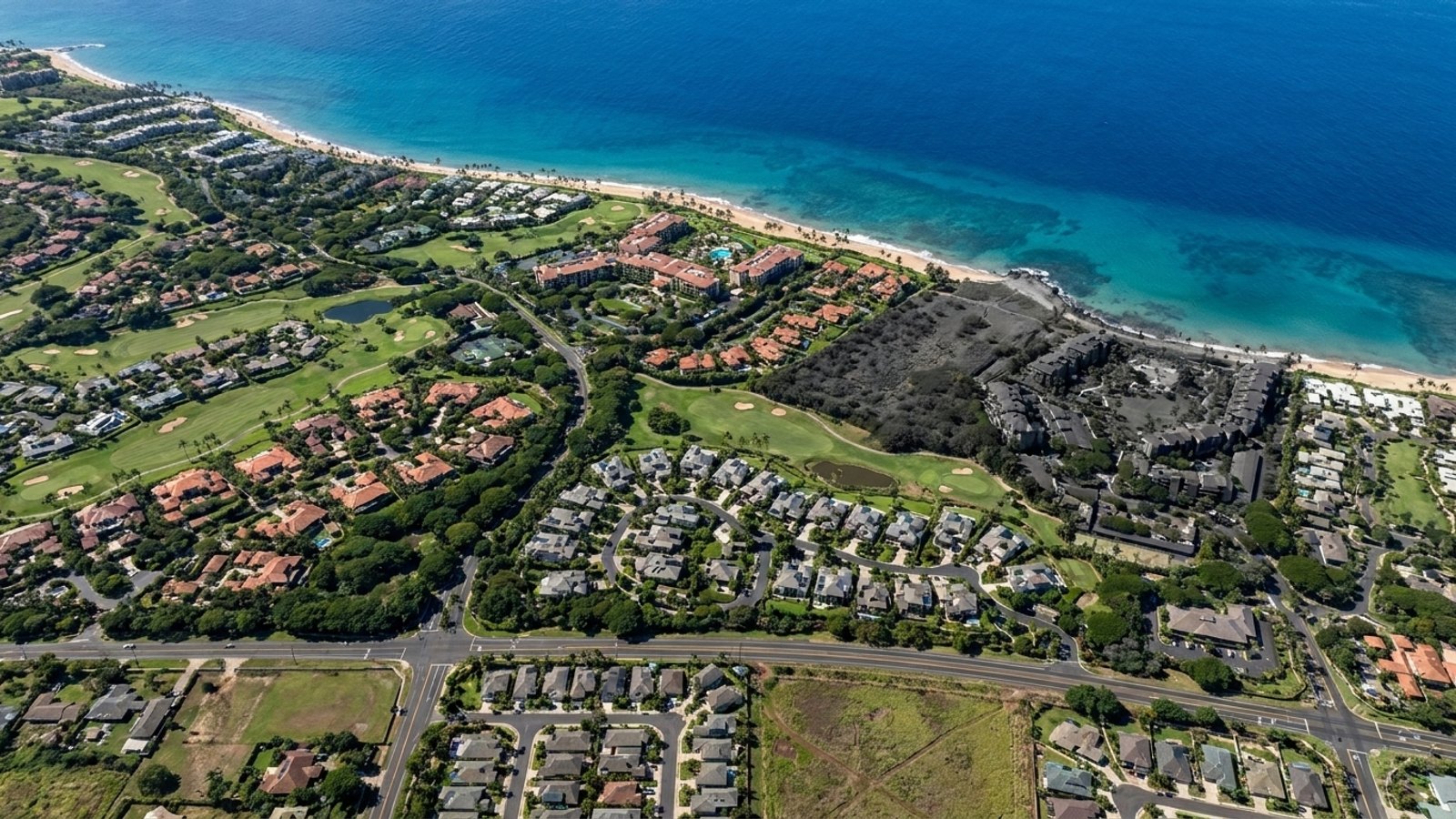
Economic conditions influence Maui luxury real estate, but they rarely affect every property the same way. A broad housing headline may sound dramatic, yet the real story often comes down to your price tier, your submarket, your buyer pool, and how confidently a buyer can underwrite the full ownership picture.
If you own a high-value property in Maui, the goal is not to react to every market shift. The goal is to understand which economic forces actually matter, how they affect buyer behavior, and what to do next to protect your equity, preserve leverage, and make a confident sell, hold, renovate, or reposition decision.
Key Takeaways
- The economic impact on Maui luxury real estate is driven by multiple factors, including interest rates, stock market performance, buyer confidence, inventory, tourism, insurance, taxes, and construction costs.
- Luxury markets do not move exactly like the broader housing market because many purchases are discretionary, lifestyle-driven, and tied to wealth conditions rather than just monthly payment affordability.
- Buyer confidence matters as much as buyer capability at the high end. Qualified buyers often become more selective when uncertainty rises.
- Insurance is now a major decision factor, especially for oceanfront, condo, resort, and high-value properties.
- Insurance questions do not automatically weaken a property. Uncertainty does. Sellers who provide clear documentation and clarify ownership costs early can preserve buyer confidence.
- Inventory must be evaluated by segment, not just island-wide. Overall low supply does not mean your property has no competition.
- Property-specific strategy matters more than national headlines in Wailea, Makena, Kapalua, Kaanapali, Kihei, and Upcountry.
- The best seller decisions focus on net outcome, not just list price, including timing, carrying costs, negotiation leverage, and certainty of closing.
What Is the Economic Impact on Maui Luxury Real Estate?
Economic impact luxury real estate Maui refers to how financial conditions, ownership costs, policy changes, and buyer sentiment influence luxury property demand, pricing power, negotiation strength, and long-term value.
It matters because Maui luxury real estate is shaped by both local and global forces. Interest rates, wealth creation, tourism, insurance risk, taxes, and inventory all influence how buyers evaluate high-end properties.
Why Economic Conditions Matter in Maui Luxury Real Estate
Economic conditions affect more than pricing. They can influence:
- Buyer demand
- Time on market
- Negotiation leverage
- Financing options
- Cash buyer activity
- Carrying costs
- Vacation rental demand where allowed
- Seller timing
- Net proceeds
- Long-term hold strategy
Luxury Real Estate Is Sensitive to Confidence
Luxury purchases are often discretionary. Even when buyers have substantial liquidity, they may delay or negotiate harder if markets feel unstable.
That is why confidence matters so much in the Maui high-end real estate market. A buyer may still want the property, still be financially qualified, and still hesitate if too many ownership questions remain unanswered.
Maui Is Both a Lifestyle Market and an Investment Market
Maui luxury properties are purchased for several reasons:
- Second-home use
- Legacy ownership
- Lifestyle and retirement planning
- Vacation rental income where legal
- Diversification
- Wealth preservation
- Long-term appreciation
Because of that, economic changes do not affect every buyer equally. One buyer may care most about personal use. Another may focus on carrying costs, rental rules, and exit strategy.
What Economic Factors Affect Maui Luxury Real Estate Most?
The main economic factors affecting luxury homes in Maui are interest rates, stock market performance, inventory, tourism, inflation, insurance, taxes, regulation, and global wealth trends.
Interest Rates
Interest rates still matter in luxury, even when cash plays a major role. Higher rates influence jumbo loan affordability, private banking decisions, the opportunity cost of cash, and overall buyer psychology.
When rates rise, luxury buyers do not necessarily disappear. They often become more selective. That means sellers need better pricing discipline, stronger presentation, and a clearer value story.
Stock Market Performance and the Wealth Effect
Many luxury buyers have significant exposure to equities, business ownership, private investments, and executive compensation. When portfolios are rising, discretionary second-home purchases often feel easier to justify.
When markets turn volatile, buyers may preserve liquidity and slow down. They may still buy, but they often want more certainty, better terms, and stronger evidence that the property deserves the price.
Inventory and Supply
Inventory shapes leverage. Low inventory can support stronger pricing and faster decisions, while higher inventory increases competition and price sensitivity.
In Maui, the more useful question is not, “How much inventory exists overall?” It is, “How much comparable inventory exists for this exact property type, in this exact submarket, at this exact price point?”
That distinction matters because a rare oceanfront estate and a luxury condo in a competitive building do not behave the same way.
Tourism and Second-Home Demand
Tourism helps keep Maui visible, desirable, and emotionally relevant to off-island buyers. It can also influence resort condo demand and vacation rental interest where permitted.
But tourism strength alone does not guarantee luxury home demand. Buyers still evaluate:
- Purchase price
- Rental restrictions
- HOA costs
- Insurance availability
- Maintenance obligations
- Long-term value
Inflation and Construction Costs
Construction costs matter more than many owners realize. In a high-cost, slower-build environment, turnkey properties often earn a premium because they remove uncertainty.
A dated luxury property may still sell well, but buyers will discount aggressively if renovation scope, timeline, permits, or contractor access feel unclear. In this environment, confidence has value.
Insurance Costs and Risk Perception
Insurance has become one of the most important economic factors in Maui luxury homes, particularly for oceanfront, condo, and high-value properties.
Buyers now pay closer attention to:
- Flood and wind exposure
- Fire risk
- Condo master insurance
- HOA reserves
- Replacement cost
- Property condition
- Long-term maintenance
The real problem is often not insurance cost alone. It is insurance uncertainty. When buyers cannot clearly understand ownership risk and cost, confidence drops, negotiation pressure rises, and demand can soften.
Taxes, Regulation, and Policy Changes
Luxury buyers and sellers often make decisions through a tax and regulatory lens. That includes:
- Property taxes
- Capital gains planning
- Hawaii tax obligations
- FIRPTA or HARPTA where relevant
- Zoning and vacation rental rules
- HOA governance
- Estate planning
- 1031 exchange considerations
Economic impact is not just about rates and markets. Clarity around taxes and use restrictions can directly affect buyer confidence.
Global Wealth and Off-Island Buyer Demand
Maui luxury demand is influenced by mainland U.S. wealth, business liquidity events, relocation patterns, travel confidence, and international buyer sentiment.
That means broader wealth creation can support demand even when local or national headlines feel mixed. At the same time, global uncertainty can make luxury buyers more cautious about timing.
How Economic Conditions Affect Different Maui Luxury Markets
Economic impact on Maui luxury real estate becomes clearer when you break it down by submarket.
Wailea and Makena
Wailea and Makena are highly sensitive to second-home demand, stock market performance, cash buyer confidence, and the scarcity of premium inventory.
Buyers in these areas typically expect polish, privacy, and a strong ownership story. In uncertain conditions, accurate pricing and exceptional preparation become even more important.
Kapalua and Kaanapali
These West Maui markets are influenced by resort demand, second-home use, vacation rental performance where allowed, tourism, and insurance or HOA considerations.
Buyers here often weigh lifestyle appeal against long-term ownership confidence. Building condition, reserves, and recurring costs can carry more weight during uncertain periods.
Kihei Oceanfront and Resort Properties
Kihei often attracts buyers seeking South Maui access at a different price point than Wailea. That can be a strength, but it also increases scrutiny around HOA fees, rental rules, maintenance, and net ownership cost.
When the economy tightens, buyers compare value more aggressively.
Upcountry Luxury Estates
Upcountry appeals to a more lifestyle-specific buyer looking for privacy, land, and non-resort luxury. The buyer pool can be smaller, which makes positioning especially important.
Economic uncertainty may lengthen decision cycles here, but the right buyer can still move decisively when the property is well matched to their goals.
How Luxury Buyers Behave During Economic Uncertainty
Luxury buyers become more selective when the market feels uncertain. They scrutinize price, condition, carrying costs, rental income, HOA fees, insurance, maintenance history, and comparable sales.
They also compare across markets. A Maui buyer may weigh your property against alternatives in other parts of Hawaii, coastal California, Scottsdale, Aspen, Palm Beach, or even non-real-estate investments.
At the same time, rare assets can still move quickly. Properties with protected views, privacy, turnkey condition, or exceptional oceanfront positioning can attract strong interest because scarcity still matters.
How Economic Conditions Affect Luxury Sellers
Pricing Strategy Becomes More Important
In selective markets, pricing cannot rely on optimism. It needs to be supported by:
- Recent comparable sales
- Current competition
- Pending activity
- Buyer feedback
- Property condition
- Demand in the price tier
A rare property can still be overpriced. Scarcity helps, but it does not override buyer discipline.
Presentation Matters More
Uncertain buyers reward certainty. That usually means the property feels:
- Well maintained
- Properly documented
- Professionally presented
- Easy to own
- Ready to enjoy
The more friction you remove, the stronger your position.
Negotiation Strategy Should Be Planned Early
Sellers should expect more scrutiny around inspections, credits, financing, insurance, and closing certainty. In this environment, terms matter as much as price.
A lower offer with cleaner terms may produce a better net outcome than a higher number with more risk attached.
What Economic Signals Should Maui Luxury Owners Watch?
Luxury owners do not need to follow every economic headline. They need to track the signals that affect their specific property type and buyer pool.
Watch these indicators closely:
- Maui luxury inventory levels
- Recent comparable sales
- Pending sales activity
- Days on market
- Price reductions
- Sale-to-list price ratios
- Jumbo loan conditions
- Cash buyer activity
- Tourism trends
- Insurance cost and availability
- HOA fee and reserve trends
- Construction and renovation costs
- Tax or policy changes
Before reacting to a broader market narrative, compare your property against current competition and recent sales in your exact segment.
Should You Sell, Hold, Renovate, or Reposition?
The right answer depends on the property, the market, and your goals.
Sell
Selling may make sense when:
- Inventory is low in your segment
- Demand remains healthy in your price tier
- Carrying costs are rising
- Major repairs are approaching
- You want liquidity
- Tax timing supports a sale
Hold
Holding may be the better move when:
- The property is rare and difficult to replace
- Carrying pressure is manageable
- You value personal use
- Rental income offsets costs where applicable
- Long-term fundamentals remain strong
Renovate
Renovating may be smart when the location is excellent, the home is dated but structurally sound, and the update meaningfully improves competitiveness.
The key is control. If costs, scope, and timeline are unclear, renovation can add risk rather than value.
Reposition
Sometimes the best move is not a major renovation. It is a strategic reset.
Repositioning can include:
- Better pricing
- Stronger staging
- Updated photography
- Clearer marketing
- Better documentation
- Minor repairs that remove buyer objections
Common Mistakes Luxury Owners Make During Economic Shifts
The most common mistakes are avoidable:
- Overpricing because the property is rare
- Reacting to national headlines instead of local conditions
- Ignoring carrying costs
- Waiting too long to prepare
- Assuming cash buyers are not price-sensitive
- Underestimating insurance and HOA concerns
- Treating all Maui luxury markets the same
- Confusing activity with true demand
Qualified offers reveal the market more clearly than views, clicks, or casual showing feedback.
FAQ
How does the economy affect Maui luxury real estate?
The economy affects Maui luxury real estate through interest rates, buyer confidence, stock market performance, inventory, tourism, insurance costs, taxes, financing conditions, and global wealth trends. The impact varies by property type, location, and buyer profile.
Do interest rates affect Maui luxury home buyers?
Yes. Even when buyers use cash or private banking relationships, rates still affect liquidity decisions, financing alternatives, and overall confidence. Higher rates often make buyers more selective rather than absent.
Is Maui luxury real estate recession-proof?
No market is recession-proof. Maui luxury real estate may benefit from scarcity, lifestyle demand, and limited premium supply, but performance still depends on pricing, condition, location, and buyer confidence.
How do insurance costs affect Maui luxury real estate?
Insurance costs affect affordability, lender requirements, negotiation strategy, and buyer confidence. This is especially important for oceanfront, condo, resort, and high-value properties.
Should I sell my Maui luxury property during economic uncertainty?
It depends on your inventory segment, carrying costs, buyer demand, and personal goals. Selling can make sense if demand exists and you want liquidity. Holding may be better if the property is rare and financially manageable.
How can sellers protect value in a changing economy?
Sellers can protect value by pricing with evidence, preparing the property thoroughly, documenting maintenance and ownership costs, clarifying the value story, and negotiating terms strategically.
Final Thoughts
The economic impact luxury real estate Maui owners face is real, but it is rarely explained well by one headline, one rate move, or one national forecast. Maui luxury real estate is influenced by confidence, liquidity, scarcity, insurance, ownership costs, and buyer selectivity all at once.
That is why broad market commentary is not enough. A high-value property deserves a property-specific strategy.
If you own a luxury property in Maui, the smartest next step is to evaluate your submarket, your likely buyer, your current competition, and your true net-outcome options. Whether you are considering selling, holding, renovating, or repositioning, clarity is what protects equity and preserves leverage.
If you want a private review of how current economic conditions may affect your Maui luxury property, Romvari Realty can help you assess market position, buyer demand, and timing so you can make the next move with confidence.